
CPT Cancer

A journal about the intersection of military life, cancer, and being a single dad.

Tag: pain management

  • Treatment Part 6

    Pain Management

    My throat has been on fire for the last two weeks. Not just painful to swallow, but actively sore to the point of feeling raw inside. To this end I was able to secure a referral to the pain management clinic inside the Army hospital. I was initially seen last week, where I was prescribed Marinol (Army-legal THC oil capsules), a fentanyl patch, and a liquid version of gabapentin, which I’d previously used pre-cancer for nerve sensation management issues. Of course, liquid Tylenol was still on the docket but we were well past the light discomfort that it could address.

    The pain doctor, Dr. George, explained that my whole career I’d gotten “baby opioids” for musculoskeletal injuries and someone like me with a very strong tolerance for opioids would need significantly stronger prescriptions. I voiced my concerns of not wanting to become a crackhead and he assured me the odds of that happening were basically non-existent in my case because there was no family history and that we’d reverse order the dosage of these medications during recovery. Fair enough, but it’s still something I’m going to remain cognizant of during recovery. Very much anti-becoming a crackhead.

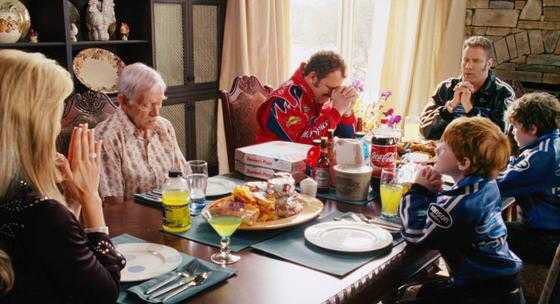
    “Y’all got anymore of them pain drugs?”

    After about a week of taking this combination I started to feel slightly better, and at my follow-up appointment it was determined I should up my doses to keep up with the rising pain level as well as introduce a faster acting short-term pain reliever hydromorphone. This worked wonderfully, until it didn’t. The drop off is steep and immediate and several times I’ve woken up writhing in pain because it quit in the middle of the night. I need to figure this out with Dr. George or I’m in for a miserable next couple weeks, crackhead status be damned. The duration of my meds’ relief is shorter and not as active. This should have been predicted because I’m coming up on three pretty terrible weeks for radiation related pain by all accounts, but me and everyone else sort of grew complacent I suppose.

    ============

    Over the last week I managed to finish my second to last week of radiation. Fortunately most of the appointments were in the evening so we were able to cut a lot of time off our return commute as the afternoon rush had already passed by. A small mercy, but a welcome one.

    My mother went to pick up my kids Friday while Thomas took me to get zapped at proton therapy, both rides went fairly uneventful. When the kids got home I got them straight to bed and put myself down too. Sleep is something my body demands of me almost hourly now, even if for just two to five minute dozes. Staying up for the kids didn’t happen, safe to say, but I did wake up in time to get everything lined up for when they arrived.

    Saturday me and my daughter got up and watered our garden, which is just about all the energy I could muster to do anything in the morning, and then we played board games until my mom loaded her into the car. They swung by the pharmacy to grab some of my new medications on the way to a “kids fest” that my base puts on every spring. By all accounts, she had a great time and they even went out to eat after. I’m glad she got out of the house for a quality experience and spent some quality time with her grandma absent her little brother.

    Me and said little brother stayed behind and built a Hot Wheels track an old friend of mine sent over for him. After we got it figured out I laid back and took in some nutrition through my tube while he tooled around with it. My waking hours have to be multi-purpose, after all. See, apart from his sister my son is a great kid, but as soon as you put them in the same place at the same time he turns into a full blown terrorist. Discipline that works is hard to come by, and the only real way to get him to “act right” is to separate them. It’s a little disappointing, and sometimes they do ok together, but I had no idea they’d fight as much as they do at this age! This summer I will have to get creative because I won’t put up with the chaos for very long once I am more recovered and have a freer hand in communication and discipline.

    Next week is my final week of treatment. Five radiation sessions and one round of chemo. The end one of the worst months of my entire life, and it’s still supposed to get worse until the cumulative effects wear off into mid-May. Ain’t life grand?

    ============

    The views and opinions presented herein are those of the author and do not necessarily represent the views of the Department of Defense or the U.S. Army.
  • Prologue Part 7: Famine

    Work Smarter, Not Harder.

    I was being wheeled down to the MRI in my bed by one of the Internal Medicine LPNs, a junior enlisted soldier like most of the LPNs on staff during my visit, and greeted by three ladies that made up the MRI night shift from 11-12 February. I know I’ve referenced the “MRI” a few times now, but for the unacquainted:

    “An MRI (Magnetic Resonance Imaging) is a medical test that uses strong magnets and radio waves to create detailed pictures of the inside of your body. Unlike X-rays or CT scans, it doesn’t use radiation. MRI is often used to look at soft tissues like muscles, organs, and the brain. It’s especially helpful for diagnosing problems that might not show up clearly in other types of imaging.” -ChatGPT

    They needed to take a look at my liver to make sure the unknown mass seen in my PET scan was benign, or part of my cancer. If it was found to be part of my cancer my survivability odds would tank dramatically.

    At this point I hadn’t eaten or drinken anything save a few ice chips in 24 hours. For someone with a strong metabolism like me this was hell; compounded by the physical and psychological toll I’d endured over the last four weeks with random fasting and diet restrictions laid on by different imaging instructions or procedural rules.

    The MRI ladies adopted a, “work smarter, not harder” approach as well as a “let’s not fuck this guy up anymore than required” and my appreciation was eternal once I realized this. Despite being doped up by an injected painkiller that should have covered me for the duration of the MRI experience, I was alert and lucid.

    A cloth gurney of some sort was laid under me, and the MRI team used it to gently slide me over from my recovery bed to the MRI tray. This really highlighted the stark contrast between men and women, even in the medical field: the men were going to brute force me as much as medically possible and insist I participate in some sort of capacity, but the team of smaller women (all three were petite and of various Asian ethnicities versus the aforementioned team of four large dudes from my last post) realized they needed to use mechanical advantage to not just physically move me but also make it as smooth as possible.

    Once in the MRI tray I was packed in with all sorts of blankets and braces as I was to not move and they needed pictures of one specific part of me: the midsection.  I don’t get claustrophobia but what I do get is nausea. About halfway through the imaging session I felt nausea rush into my head quickly.  The neat thing about an MRI is it has a microphone so you can communicate with the staff. I quickly informed them I was going to be sick and that I needed to get out now (I literally couldn’t move my head to puke if I’d wanted).

    The MRI team jumped into action and rolled me out just in time to remove some of my restrictions and put a barf bag next to me. I tilted my head to the side and began to dry heave; I had nothing to give.

    Dry heaving requires a tremendous flex of the abdominal muscles, as I remembered far too late. Each heave sent me into spasms of pain as I involuntarily flexed my ab wall as hard as I could to meet the needs of my digestive tract trying to return something to sender.

    Just as quickly as the nausea came on, it subsided and I felt perfectly fine. We gave it a few minutes and reset; they only had about 15 minutes worth of work left to go. Back to the grindstone (I contributed nothing other than breathing in and out when the voice told me to).

    Just as I had been smoothly transitioned into the MRI tray, so I was slid back into my hospital bed. These ladies were true masters of their craft from top to bottom and this was probably the highlight of my hospital stay from a customer service perspective.

    After being brought back up to my spot in the Internal Medicine Hostel of Excellence I was escorted to the bathroom and was alarmed to find the large volume of ice tea leaving my body, or at least that’s what the color of the urine suggested. I complained to the LPN that I was obviously dehydrated and the answer provided to me was a cup of ice chips. At this point I’m assuming ice chips are the Motrin of the LPN world.

    I, figuratively, crushed that cup of ice chips. One after one I put them into my mouth to be dissolved, crushed, and swallowed; right as I finished I was brought yet again more useless oxy, an antibiotic, and an anti-nausea med… all to be taken orally on my terminally empty stomach. They gave me water to accompany these pills and no sooner did I swallow the pills did my body immediately reject them. I began to vomit medicine, water, and ice chip remains into my barf bag. I filled this bag nearly halfway with water and anything else my stomach could find to send up the hatch. I was getting pissed off now, they were not listening to what I was telling them this entire time- or at least not doing any critical thinking about it. I looked at the 2LT RN on shift and said, “Get me a Doctor, LT.”

    Now, anyone who has been a Lieutenant knows that the inflections of “LT” are very important to interpreting the meaning behind what’s actually being said or asked.  The inflection I used in this instance was intended to be interpreted as, “I’m done talking to you, go get a fucking adult.”

    The night shift resident came to my bed and introduced himself. My mother departed several hours ago when visiting hours ended: this was mono y mono. He asked very simply, “What’s going on.”

    “My piss looks like ice tea, I haven’t eaten or drank anything I could keep down in over 24 hours, giving me more medication on a completely empty traumatized stomach isn’t working. So why don’t you guys use this IV port in my arm to hydrate me and administer IV medications? Is that unreasonable?” I said, asking questions that we both knew the answer to.

    “Those are both very reasonable requests, I will put in the order.” He said, and was gone just as quickly as he appeared. I’m hoping some mentorship occurred at the nurses station, but I’ll never know- perhaps they all made fun of the Captain dying of dehydration and turned me into a meme in their groupchat. I know that is probably ethical sacrilege, but it adequately describes my growing mistrust in my surroundings at this point in the story.

    ============

    A Rogue Blood Vessel.

    Once the IV drip began and they shot the anti-nausea meds into it, I knew I was probably going to be ok. Despite all the pain and shenanigans up to this point, someone finally listened to me and addressed my needs. I don’t sleep on my back, so I had to list a little to my right and bring my knees toward my chest to form a modified recovery position. I dozed for a few hours at a time; only waking when my subconscious detected a nurse coming in to take vitals.

    When I was awoken for the final time, around 0630, it was by the same IR doctor that inprocessed me the previous morning. He wanted to see how everything was holding together and how the pain was. The pain had significantly subsided as long as I remained still, and he checked their handiwork and started to talk about care and maintenance I was too tired to pay attention to. I spoke about the food situation from the day prior, and he said he’d talk to someone about it on his way out (he didn’t). 

    Before he left, however, he mentioned that my MRI came back, and that the spot on my liver was consistent with an enlarged blood vessel, a hemo-something, that was common in many people and typically only found if that person has a PET done. This means it was benign and not related to my cancer. This was a solid piece of news and lifted some large grains of stress off of my shoulders.

    “You know, one less thing.” -Forrest Gump

    The new LPNs rotated onto shift as well as a new doctor, right around the time my mother returned for visitor hours. The new doctor understood my predicament from the day before and said he’d change my order to reflect getting some solid food.

    The social worker, the inpatient case manager, the nutritionist, and the outpatient case manager all happened to come by during the time it took to actually get food- a roughly four hour span. Progress was glacial, but eventually they gave me a shot of anti-nausea meds and placed a tray in front of me; I dug in immediately.  I ate the cookie first because it felt like an act of civil disobedience. I know it made no difference which order things were eaten in, but it still felt good to push back on the norms of society in this place. After finishing all my food, plus four hours, I was finally discharged from Internal Medicine at 1630. Thank you eight pound, nine ounce baby Jesus.

    The views and opinions presented herein are those of the author and do not necessarily represent the views of the Department of Defense or the U.S. Army.
  • Prologue Part 6: The New Normal.

    Pain Management.

    There’s time where life imitates art, and there is time where it absolutely does not. Tuesday, 11 February was the latter.

    Once again I parked the trusty Corolla in front of the entrance of the hospital where I’d go in and have another procedure done, but this time escorted by my fresh-off-the-plane mother instead of Rena.

    I already knew that shows like ER and Grey’s Anatomy took tremendous liberties with hospital life and the medical profession, but they still do a tremendous amount to provide a framework to what you think something is going to look and feel like, and how your doctors or other medical staff behave. I still couldn’t help myself in believing medical doctors are our best and brightest, empathetic, and exercise excellent judgement- that’s my fault and I own that. However, when you have those, “ah fuck these guys are human too” it can be a little jarring. After all, up to this point I’d had world class care from my team of doctors.

    What I imagine to be waiting for me anytime I walk into a hospital.

    Interventional Radiation (IR) is the department at the hospital that is largely responsible for implanting medical devices into people’s bodies. It earns this name because they perform their procedures under live radiation imaging. I checked in at the window and was brought back by the IR nurse who looked like one of my old NCOs from my PL days at Fort Bliss. That NCO was not particularly intelligent so my anxious subconscious assigned those traits to this nurse. Fortunately, later he proved to be a highly competent professional, as I also perceived the entire IR department until I got into recovery.

    I was sat down and told to take my shirt off and put on a gown, but that I could keep all my other clothing, even my shoes, on the entire time. I put the gown on but thought better of the shoes, as I wasn’t going to put my feet into coffins for my entire 24-36 hour stay. Remember that I am wearing a gown: this will be important later.

    A nurse came in and pulled out an ultrasound and began talking to another nurse, “Yeah I want the 20 instead of the 22.”

    The double edged sword of spending some time in medical settings is that you learn things that you’re better served not knowing. I know, for instance, that those numbers meant needle gauge given she was running an ultrasound on my arm to find the biggest vein she could for my IV. I also know that the smaller the number, the bigger the needle. I felt the difference, and it wasn’t pleasant.

    I met with the IR resident doctor, who went over the procedure and what to expect after, and then waited to be brought into their operating room. I once again reminded my mom what the code to the safe was and where to find the spare keys if she couldn’t get it to work, and the same instructions that I gave to her prior to my biopsy. I wasn’t getting put fully under for this, but they were gonna goof around near my heart and that was enough to give her that information again.

    After being wheeled back I was fully awake and alert for their prep, but as they began to administer their local anesthetic and the sedatives in my IV, I began to drift in and out of consciousness. I remember there were times that the drugs being administered caused my breathing to slow tremendously, and I know this because one of my few memories of it all was being told to breathe by the nurse several times.

    I began my slow ascent to full consciousness in the recovery room. Immediately, I hated everything about what was happening to me. The pain was unbearable. I felt like my abs were being stabbed from the inside and underneath my ribs. I was sore, thirsty, hungry, tired, and restless all at the same time.

    See, I wasn’t allowed to eat after midnight, or drink any clear liquids after 0500 for the 0700 report time and 0800 surgery. They also said they would not be feeding me for 24 hours after the procedure. Fun times ahead, folks, stay tuned.

    Writhing in pain is something the IR staff did not anticipate. As I found out later, many of these doctors do not see young, healthy, in-shape 38 year olds get feeding tubes often enough for them to accurately predict what will happen when they do and thus, were caught off guard by what happened.

    I was told by the lead IR doctor that people in my demographic typically have it “harder” when getting a feeding tube because our nerve endings are all woven into our abdominal muscles. If you don’t have particularly strong abdominal structures (read: fat) your nerves typically don’t get as pissed off as mine did.  My nerves were absolutely letting me have it.

    Another fun fact about me? I’m resistant to narcotics, as in, anything less than fentanyl my body casts aside as it would a placebo. They gave me short-acting pain killers to my IV to try and solve the immediate pain problem but their longer term answer was Oxy. This was a bad idea for two reasons: One, they gave it orally to someone who had an empty stomach (that recently had a hole punched in it), and two, they were fully warned, by me, that I have a high tolerance for narcotics. It was not effective. Wow, who could have possibly predicted that?  Oh, wait, I did. Yeah. Me. I predicted that. Strike one.

    ============

    The Red Pill.

    The pain didn’t subside much despite their stunted efforts at it. It would ebb and flow from within me the second one of the short-acting pain killers subsided. They were powerless to give me another dose of fentanyl because of what it did to my breathing, so they had no real choice but get my pain under control just long enough to wheel me up to Internal Medicine.

    Internal Medicine is a bit like the hostel of the hospital. Rooms with four beds a piece with people under observation from other departments, or overflow recovery. Internal doctors are basically general practitioners whose job it is to keep the lights on and the patients alive on this floor of the hospital until they are discharged or collected by another section of the hospital.

    My bed was wheeled up, and I still wearing my gown and a couple warm blankets over me, to my spot in the room. Four large men struggled to slide me from one bed to another, with each jolt and jerk shooting massive pain through my abdominal region. They didn’t think put a blanket or any kind of sling otherneath me, despite these options being readily available as later found out, and they actually insisted I help them fumble-fuck their way through transfering me into my new bed. The gown impeded the process every step of the way as it bound around me with every movement. I was in pure pain. Strike two.

    The 2LT nurse looked at me with concern after being largely responsible for this disaster and its consequences; at least he felt bad. He managed to inject some high-power Tylenol to slow down my pain, but only bought us time to figure this out. They administered another dose of oxy and friends by mouth on my still-empty stomach, perhaps in hopes that I’d miraculously lower my narcotics tolerance. I did not.

    The shooting pains from under my ribs did manage, on their own, become less and less and settle into a dullness. It was around this time that LTC Sierra and her deputy MAJ Flood came by to see me at my request to talk about what just happened, and to examine the lump. I was complaining that the pressure it was exerting on my jaw was becoming more noticeable instead of latent or only present when turning my head to the right. They speculated my second lymph node was likely growing in size but that I shouldn’t be concerned. We talked over referrals, more questions of treatment, and they went on their way. I was in a better mood after they left- I’m always glad to see them now.

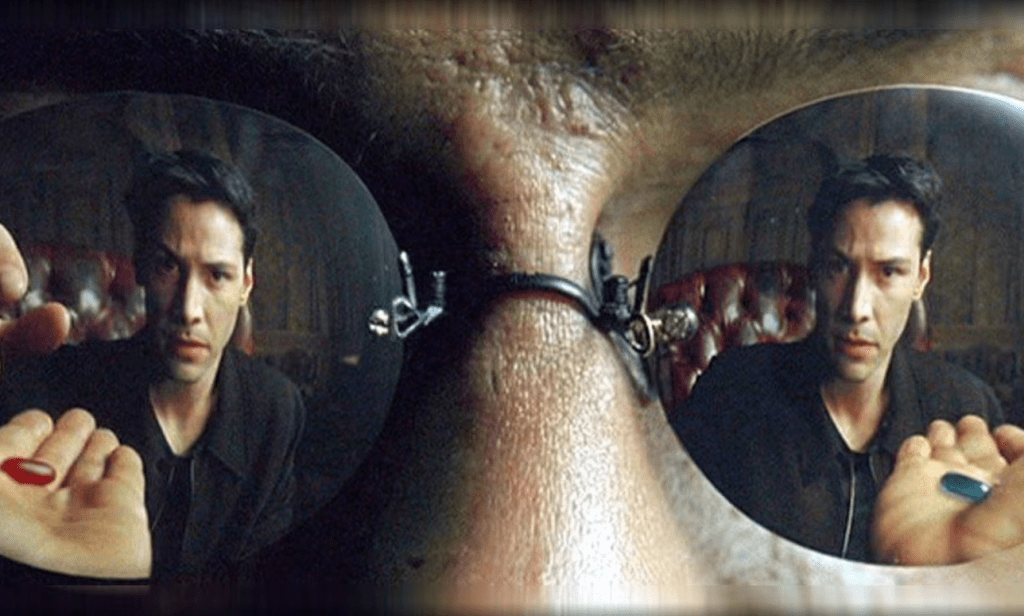
    Remember the famous scene from the Matrix where Neo can take the blue pill and return to being oblivious in the Matrix, or he can take the red pill and “wake up”? The rest of this stay was going to rip off whatever illusion I had left that hospital staff had it together more than the rest of us. I guess they snuck the red pill in with the rest of them.

    Whoa.

    My pain was a concern for a secondary reason to the doctors and staff: I had to have an MRI later that evening to examine the mass the PET scan caught in my liver. They began to scheme ways to make me as comfortable as possible prior to going down for the MRI.  The answer they came up with was only slightly more inspiring as the sun disappeared and the MRI appointment approached: more oral meds and an injection into my IV port (I’d been without an actual IV line since morning) to keep my body calm just long enough to complete the MRI. Strike three. The last scraps of “this person is a highly trained professional and has surely thought through all of this” was discarded as soon as I arrived at the MRI suite.

    The views and opinions presented herein are those of the author and do not necessarily represent the views of the Department of Defense or the U.S. Army.