
Forks in the Road
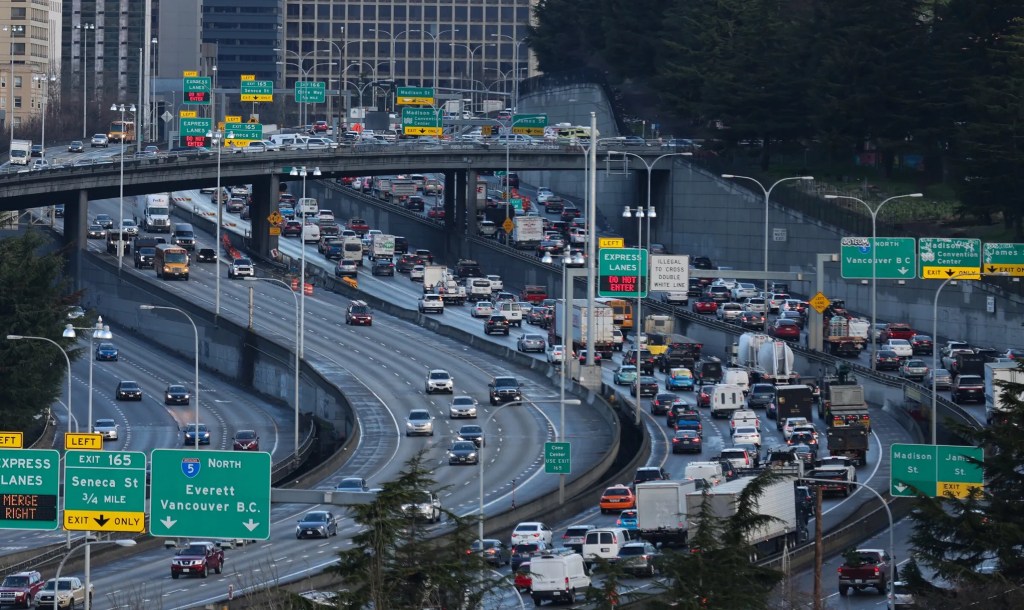
A few days after I’d been seen at the university hospital I was scheduled to return to a different hospital campus in that same system a few exits further north, meaning in good traffic my daily drive would be at least an hour there and back. This is a long way to drive for medical treatment by any standard, but even more punishing considering that I live in the largest metro area in the upper left corner of the country. Most days I-5 is unforgiving at best; in the Puget Sound metro area this day was no different.
At this point I was used to pulling up to parking meters where I’d have to take a ticket and remember to have the medical office validate it on my way out for large garages or sprawling lots at some medical mall, and this day was no different. I took my ticket, and pulled up to the building that had “PROTON CENTER” in giant letters on the outside. I was told that these buildings are actually built around the proton radiation machines due to their size. Big if true.
Walking in through the front door revealed the stark difference between a general hospital and a cancer center immediately. Huge cathedral ceilings, couches in a giant waiting area that had a library, a snack bar, wifi, and two receptionists and their assistants. This was like comparing my local county rink to an NHL practice facility.
I was greeted, a badge made for me, my parking validated, and given some paperwork to complete. I didn’t even have enough time to finish the paperwork before being called back to the “NASA” room where I was to see the first in a line of people that would be involved in my care. It’s called that because this type of therapy is most commonly given to pediatric patients and they’ve teamed with NASA to create interactive experiences to explain to the kids what is going to happen there. I was lucky to get a Star Wars band-aid at the doctor when I was a kid.
First up was the “Patient Navigator” which is basically a social worker of sorts. I was given a lot of information in folders about my doctor, the treatment, the care team, facility, and additional information on nutrition, side effects, and lodging for the area.
After that me and my mom were taken to a more standard clinical room where I was asked by the LPN to review my medications they were tracking and to take my vitals. She was followed up by my nurse, who gave me an IV port in preparation for my CT scan during mapping (the contrast fluid, like the others I’ve discussed previously, is given through an IV). Interestingly, she asked me if I wanted it in my chemo port or in my arm. I decided I wasn’t ready for the trauma of having a line run into my chest just yet and opted for a traditional arm vein. It came up during this conversation that my nurse also had a chemo port installed. I didn’t ask why, which I figured would be impolite, but my first reaction was no longer of curiosity, just sadness that another younger person has to walk around with this bullshit.
Dr. Panner was unavailable to meet with me, but it wasn’t really a big deal to me. He’s not some sort of final boss like a video game- he’s more of a supervisor. He checks, validates, and troubleshoots problems no one else can figure out. The LPNs, RNs, radiation techs, and the other worker bees are the ones that would handle me day to day so it was more important to me to see their faces.
The mapping process was virtually identical to the one I did at the Army hospital’s RadOnc, so if you want to relive that experience, check out this post. As soon as I was done, they said that I’d be starting in just over two weeks, to expect 33 treatments, and to expect a call within a few days of the start day to hammer out a report time. In the meanwhile I had appointments and other preparatory chores to keep me busy, but nothing exhaustive. I still had the big decision looming over where I wanted to do chemotherapy, but that wasn’t super pressing at the moment.
I discussed it with mom, and we decided it would be best for her to fly home for a couple weeks because there was no real purpose for her to be here if I wasn’t going to be starting treatment when we first thought on 3 March. She booked a flight out for the next evening and that ended part 1 of my mom as a caregiver. She made it to all the important appointments, helped me survive the tube and port placement, and was a forcing function to get me to address some tasks I know I’d have been overwhelmed by if left to my own devices. Good moms are hard to come by; I’m luckier than most in this regard.
The next morning I had hastily scheduled a dental cleaning since I had space in the calendar to do it now. Because I wanted one as soon as possible, the clerk at my dental office sent me to an office across post that I’d never been to. It was almost serendipity, because as it turns out, my hygienist was a cancer survivor. He had melanoma that spread to his lymph nodes and he told me all about his treatment and recovery. It was a different cancer with a different treatment, but a fascinating perspective. The cleaning was unusually gentle and fast and left me wondering if he had taken it easy on me because I was in the same club, or if my teeth were actually just that clean. I guess I’ll find out in six months.
After a fairly uneventful phone call with a different social worker at the cancer center pertaining to lodging assistance I was skeptical I’d qualify for, I said goodbye to my mom and hit the road to go get the kiddos.
============
The Decision
I had a pretty good weekend with the kids. My daughter played in her hockey game in the morning, per usual, then came home to work on a new puzzle I’d gotten her from one of the local thrift stores. It was 300 pieces, which was going to be a new record for her, and I wanted to give her some time to relax before we went to the park. It was going to be a ‘false spring’ day, sunny and over 60, so I was planning on taking them down to a playground near Puget Sound and letting them wear themselves out with the undoubted throngs of other kids.
I met an old Army buddy there with his kids and brought him up to speed with everything going on with my treatment, and caught up in general. We generally talk a lot of shop when it comes to hunting, and I lamented that I still have a bag hanging in a tree in the national forest with some of my hunting camp supplies. It’s 5 miles one-way to this bag; with a 2000 foot elevation gain and it stays snowy until after Memorial Day… yeah it’s gonna be up there a while longer.
My son, who is barely removed from being a toddler and has some sort of developmental delay to boot, started melting down and I knew it was time to go. He was upset to have to leave but was generally moving with us toward my car. Then the fucking ice cream truck showed up.
Giving this thing the title of “ice cream truck” is pretty generous. Some of you are already picturing what I’m talking about. This thing was a minivan that probably had a salvage title, a bunch of coolers in the back, and “not for individual sale” ice cream bars and sandwiches being hawked from it. The poorly adhered labels on one side and obnoxious music blasting from it were the chef’s kiss on this tetanus-mobile. Under no circumstances would we be getting ice cream from this thing.
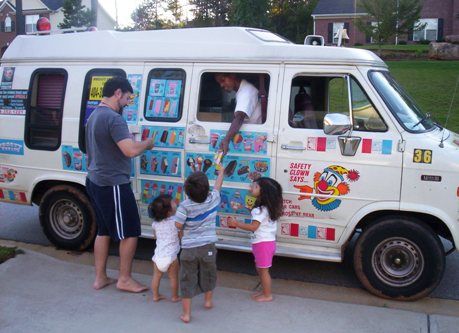
My son had other ideas, and at first I had to grab his hand and pull him along, then he went dead weight and had to be picked up. I slung him over my shoulder as he had a meltdown and eventually got him into the car. He viciously resisted being put into his car seat as the meltdown continued, using all the physical tools at his disposal. Normally this doesn’t bother me, as I will always win this contest, but in this instance I was nervous he’d grab at my tube or headbutt my port. Fortunately he didn’t, and by the time we got home he was done giving us a piece of his mind.
The start of the next week was ushered in by me throwing on my uniform and showing up to the office. It was about time I rolled in and started chipping away at what few tasks remained on the docket. Right after lunch I decided I’d had enough and left to see about some prescriptions and other admin items that I needed to get sorted out. I felt as normal as I could tolerate for half a day.
I had my mandatory referral to behavioural health, specifically a clinical psychologist who sees cancer patients, the next day. It only took me four tries to get to the right office, as the annex I went to was loaded with ambiguous titled BH offices. Once I made my way to the correct place I filled out more paperwork, and was sat in front of a computer to do a fancy screening to make sure I wasn’t going to kill myself of others.
I sat down with the psychologist and began to talk about the results of the screening (I passed with flying colors, you all are safe… for now) and a variety of subjects. He assessed that I was very resilient and had a good support system, so that if I wanted to come back I could do so on an “as-needed” basis. I am choosing to believe he is right and this is one appointment that I can permanently shed.
It was around this time I started to solidify the decision about chemotherapy in my mind. The choice was: move my chemotherapy and all my specialty referrals over to the cancer center, or keep it all at the Army hospital. Ultimately I decided to keep it all at the Army hospital. Logistically speaking while yes, I’d be driving to the cancer center every weekday, over the long term and in acute instances I’d be seen at the Army hospital and it just made more sense to keep as much under that umbrella as possible.
While this was 100% my decision to make, I still felt a great deal of relief calling the cancer center to cancel my onboarding appointment with them later the following week. It just made sense, so, naturally, I fully expect this to blow up in my face. Old habits die hard; in this case in the pursuit of not dying at all.
(Author’s note: This may be the penultimate or final ‘prologue’ entry. Stay tuned)
The views and opinions presented herein are those of the author and do not necessarily represent the views of the Department of Defense or the U.S. Army.
 CPT Cancer
You must be logged in to post a comment.