CPT Cancer

A journal about the intersection of military life, cancer, and being a single dad.

Tag: hockey

  • Prologue Part 4: The Gang Gets Booed in Canada

    Referral-ception.

    I’ve not gotten nauseated by the (now) two times I’ve been under general anesthesia, but I sure do get dizzy as shit when I stand. Rena was able to get me into her small SUV with the help of a volunteer at the hospital, but getting from the street to my house took a little more of a coordinated effort. My frame dwarfs hers and it was like one guy trying to move a large box that barely fits through a doorway solo: technically possible, but not advisable if it can be avoided.

    She put me into bed and started a medicine journal for me. After some dozing, I joined her on the couch and we started watching “American Manhunt: OJ Simpson” on Netflix.  I vividly remember the OJ Simpson trial as a kid in the 90s: the courtroom drama, the main cast of witnesses and their tabloid exploits, and of course the white bronco. Sadly, this was the one part I wanted to see the most and I managed to doze off for only that episode.  Not doing anything besides being put to sleep and cut open is absolutely exhausting.

    Eventually Rena passed me off to someone we’ll call Addison for now. Addison and I had just started dating and despite everything going on with me, she was still subscribing to the idea that I might be worth trauma bonding with over this experience. She even shopped with me the night before the procedure to make sure I had throat-friendly foods to survive off of for at least a few days, and kept me from buying more than one thing that were poor investments to this end.

    Addison kept up the maintenance of my medicine schedule and kept vigil until the evening. Because of my prolific napping during the day, I’d managed to stay up well beyond my normal bedtime but eventually managed to go to sleep.

    Rena once again escorted me back to the hospital for a follow-on ENT appointment two days later with LTC Sierra. She basically reaffirmed she had no reason to change her opinion on the findings despite Pathology not having completed the biopsy yet, and began to run down the complete cast of characters I was about to see in the coming weeks through referrals and referrals from my referrals. 

    We need to go deeper.

    ============

    Your average law enforcement interaction.

    In preparation for the eventual official diagnosis I made plans to go to Canada with Addison. See, she’s actually Canadian and was floored that I’d never been, what with having spent so much of my life in states bordering the great white north. My Detroit Red Wings were on their western North America road trip and this was as good of time as any to go see them. Hell, for all I knew it was the last time I was going to get to see them. I found us reasonably priced tickets, and she was going to be my chaperone as we made our way to Vancouver (she likes to joke that this was actually the second time I’d been in Canada).

    Fortunately, I made the call Saturday that I was feeling well enough to travel because my sore throat was just about gone and I was able to choke down (bland) solid foods. Mother nature gave us her best shot as we braved significant snowfall all the way up I-5 in her seasoned RAV4, but we made it to the border where Canada was rolling out the red carpet on the heels of the Trump tariff announcement.

    I handed the Canadian border guard our passports, answered the line of questions your average American would expect from law enforcement, and went on our way. 

    Addison immediately turned to me and said, “Wow, I’m sorry she was so extra; that’s more aggressive than anything I’ve experienced before.”

    Me, visibly confused, “What do you mean? That is about what I expected…”

    Addison explained to me that what I found to be a very standard law enforcement interaction was, in fact, incredibly unusual and that I was treated with undue hostility.  I was still amazed that we were the only car at the gate for the entire interaction and that no one was visiting Canada or even returning home on a Sunday afternoon.

    We had an absolutely amazing time checking out the Grandville Island district, checking to see if the rumors were true about Canadian Costco carrying bulk hockey gear (fake news), and heading into the arena.

    Something you need to understand about hockey, if you’re unfamiliar, is that both anthems, Star Spangled Banner and Oh Canada, are played if one of the teams is from the other country. This is fairly standard practice across both nations, and the crowd sings, or is at least respectful of, both anthems. Because of the tariff announcement, two Canada games from the previous night involved the crowd booing the U.S. anthem. This is almost unprecedented, as there are even documented instances of both anthems being sung by the opposite crowd when PA systems fail. You have to understand and appreciate hockey culture to really understand how fucking angry fans have to get to break with this tradition. This is peak hockey civil disobedience.

    Vancouver fans are generally the rowdiest of Canadian fanbases, and they had a whole 24 hour sports news cycle to soak this up. I was expecting boos during the anthem, but Jesus Christ. It was loud, it was uncomfortable, but I held my hand over my heart and my lips shut and stood respectfully silent for both anthems. I mean, I get it, they have a right to be upset and symbolically voice their distaste. Of all forms of protest, this was pretty innocuous if the other end of the scale is blocking an interstate highway.

    Fortunately, it was a fairly standard hockey crowd and even leaned, perhaps, at least 20% Red Wings fans. Despite dealing with the stress of an overtime game as an “away” fan in my weakened state, it was an overall good experience and I’d go back.

    We eventually made our way back south, and got caught in the throng of Americans returning home for the weekend where we experienced a very cheery, albeit short staffed, American border crossing guard that lightly roasted Addison for admitting she didn’t buy me anything.

    The next day I was officially diagnosed with cancer.

    ============

    My tumor has more civil rights than the average North Korean citizen.

    I saw the pathology report in Genesis the moment before LTC Sierra called me. It confirmed everything she’d hypothesised up to that point: oropharyngeal squamous cell carcinoma with p16 marker, meaning HPV related. Congrats on being one of the fewer than 30,000 people, overwhelmingly men, that get this a year, Kyle! The good news, if it can be called that, was that because I wasn’t a smoker or drinker, my flavor of cancer was much more responsive to treatment.

    What does that mean? I was being referred to the following for evaluations and preparation to find out:

    • Radiology Oncology
    • Medical Oncology
    • Speech Therapy
    • Nuclear Medicine
    • ENT Oncology at a nearby civilian hospital
    • Nutritionist
    • Behavioral Health
    • Social Worker
    • Case Manager
    • Genetics

    I could hear the appointment wait line music start to play in my head.

    “All of these people will call you, you shouldn’t have to chase anyone down,” she said as visions of appointments danced in my head.

    The tentative treatment plan would be surgery, radiation, and chemotherapy but the “Tumor Board” (this is not a euphemism for the chain of command board in the company HQ, as PFC Cancer would have cracked a joke about earlier in his Army career) would convene on Friday to “stage” me and formally recommend treatment. This would all hinge on the results of my “PET scan,” which was a type of scan designed to see if the cancer had spread to any other parts of my body.  Cancer in other parts of the body = Fire up the John Cena tracker.

    The Tumor Board is all the heads of state of the relevant departments; in my case ENT, Radiology, Radiology Oncology, Medical Oncology, and Pathology coming together and voting on a plan to present to me for approval. There’s even meeting minutes, of sorts, in my Genesis records.

    They presented their plan to me immediately following the meeting, at my previously scheduled onboarding appointment at radiation oncology: No surgery was being recommended, but still to see the ENT Oncology civilian expert to get his opinion. I was being told radiation and chemo were my path forward, but that I was free to ask Medical Oncology their thoughts next week on immunotherapy. The silver lining, of sorts, was that the PET Scan didn’t reveal anything but some, probably, unrelated scarring on my lungs and a mass in my liver that was probably a benign rogue blood vessel, but I’d need a separate MRI of that just to be sure.

    Let me backup and explain the PET Scan real quick, with the help of our friends at ChatGPT:

    “A PET scan (Positron Emission Tomography) is a type of medical imaging that helps doctors see how your body is working, rather than just what it looks like.

    Here’s how it works in simple terms:

    1. A special substance (called a tracer) is injected into your body. This tracer contains a small amount of radioactive material that can be tracked.
    2. The tracer moves through your body, and certain parts of your body (like organs or tissues) use it. The tracer gives off tiny particles called positrons.
    3. A scanner detects the positrons as they are released, creating images of where the tracer has gone. This helps doctors see areas with changes in activity, such as tumors, infections, or problems in the heart or brain.

    In short, a PET scan helps doctors look at how things are working inside your body, not just the structure, by using a special tracer and detecting the energy it gives off.”

    What happens in reality is you show up to Nuclear Medicine after 24 hours of only being allowed to eat plain meat or solid plain cheese and water, in your comfy clothes, get an IV placed into your arm and brought into a room with dim lights, no sound, and a warm blanket. The rationale here is that a stimulated brain and shivering muscles will absorb the radioactive material you are getting injected with, which is universally seen as bad.

    Just in case you glossed over the first few mentions: you are literally getting injected with radioactive sugars. The tech brought it into the waiting room in a lead-lined case, in a lead-lined syringe and injected it into my IV. Awesome, at least if I have cancer I also may develop superpowers for a short time as a result.

    Then you lay in yet another MRI-esque scanning tube to get your PET and another round of CT with contrast. After the CT with contrast my face had a reaction to the contrast, which was a slightly itchy face and the slight look and feel of being sunburned. I am just glad I didn’t get actually cooked by the scan- it would be a real bummer to have cancer and radioactive blood to go along with a sunburned face.

    Fast forward back to Radiology Oncology.

    Radiology Oncology itself is quite possibly the scariest appointment I’ve been to to date. Everything being described by the Dr, a jovial fellow we’ll call MAJ Rafferty, was horrific to my non-medical mind.

    After every disturbing side effect of radiation and chemo was listed, it was always capped off with, “…but your type of tumor will just melt away by the end.” 

    Fortunately, he did place a referral to the nearby highly regarded cancer center called “Fred Hutch” to see if a different kind of radiation might fit the bill better, one generally given to pediatric patients but, once again, because of my age, I may be a candidate for.  The perks of being “the youngest we’ve seen” I suppose.

    The next entry of this journal will be somewhat delayed, the reasons for which will be covered in the next journal entry.

    The views and opinions presented herein are those of the author and do not necessarily represent the views of the Department of Defense or the U.S. Army.

  • Prologue Part 3: So what are you doing tomorrow morning?

    The ENT.

    I actually ended up having my Ear, Nose, and Throat (ENT) specialist appointment at noon on 29 January. Walking in, I’d already knew what to expect to some degree, however.

    One of the benefits of the beleaguered Military Health System “Genesis” portal is the centralization and digitization of all your medical records as soon as they are entered into the system. I saw the radiologist’s report of my CT scan, and unprompted, CPT Bennett had called me earlier that morning to see how I was feeling. She read the notes and saw the big scary “T word,” tumor in the notes.  She mustered her best positive, but grounded, reassurance that it may still be something else… but I’d been too deep down the rabbit hole at that point. I’d spent a couple days reading up on lymphoma. Hey, grandma had it and beat it, so I should be fine, right?

    Enter CPT Bruner, the resident ENT that was my first contact in the ENT clinic. She was affable, professional, and upbeat while preparing to, and then running, a camera down my nose into my throat.  I had no idea if you could see my lymph nodes from inside there, but I’m a Public Affairs Officer, not an ENT, so I did what I was told. 

    After about 90 seconds she withdrew the scope and showed me the replay.  She paused it at 56 seconds and pointed at something, “That right there on the left, see how it’s asymmetric with the other side? That’s consistent with what we are seeing on the imaging. Your lymph nodes are absorbing cells from that.”

    This is widely regarded in the ENT community as sub-optimal.

    I was grinning with nervous laughter as she calmly explained to me that everything I was experiencing was consistent with a “oropharyngeal squamous cell carcinoma” which is a type of cancer of the throat and neck.

    I’ve cried real tears a handful of times in my adult life. Losing a pet, losing my grandfather, the darkest day of my divorce, and now this. When she asked, “Is there someone you want me to call and talk to and explain this too, like a parent?” I melted into a puddle of tears. No, I don’t want you to explain this to my parents, I need to know how I’m supposed to explain this to my daughter, to my kids.

    I’m 37 how in the fuck do I have cancer? I’m not a smoker!

    She wrote the name down on a little note for me and left the room. She walked back in with a woman that looked roughly my age, LTC Sierra.

    “This is LTC Sierra, the chief of ENT and she wants to look over you and answer any questions you might have,” CPT Bruner explained. Exit stage left CPT Bruner, this was now LTC Sierra’s show as I was about to find out.

    After her own exam, she basically repeated everything her junior partner had said. I knew I was “cooked” as the youths say. I didn’t have many questions. I went in there expecting to be told I had lymphoma, not some other wild bullshit.

    I’m not a smoker and barely drink, why is this happening?

    “We can’t say for sure without a biopsy, but given that you’re a never-smoker, not a drinker, that leaves us with some strong guesses based on your age. This may be due to HPV exposure, but since we have no way to test men for that like how women get their annual pap smear, we need to biopsy the tissue just to be sure. So what are you doing tomorrow morning?” LTC Sierra asked, barely concealing the sense of urgency this now took on.

    Nothing. I was doing nothing. This was now the only thing I was doing until I wasn’t.

    Of course, I had work to do, but I knew as soon as I dropped the news on my boss that she would clear my plate. A Soldier that has a major life issue is seen as distracted at best, depending on the issue, and a liability at worst. This is a fact of life in most careers, but amplified in the Army where there is still a lingering negative stigma around people who fill their calendar with medical appointments. This was not the culture of my office or leadership, but when you’ve been in the Army as long as I have, the biting sensation of that stigma remains no matter how legitimate your issue.

    The chief of ENT was signing me up for surgery at 0600 to perform four biopsies, and needed my consent to remove at least one tonsil (this type of cancer is sometimes referred to as “tonsil cancer.”) I needed to have a driver show up with me and be on hand at the end to pick up my meds and drive me home.

    Enter the next hero in our story, Rena.

    Between the doctors and nurses coming in and out I was on the phone texting people on a “need to know” basis. My boss, my parents, a couple group chats, and Rena.

    See, Rena is the only other young person I know that had cancer. She’s a breast cancer survivor from when she was 27 years old. She’s also on my co-ed hockey team and is one of my daughter’s surrogate moms from the rink (when you’re a single dad and have a little girl that plays hockey, all the boy moms that don’t have daughters adopt yours by proxy). Her husband is a stand-up guy and fellow veteran to boot; I’m like a rental brother-in-law to their small family.

    “Hey, I need a ride to the hospital tomorrow at 0600, will that fuck up your life,” I asked, on my way back to my office.

    “No, I will talk to Jeff and we’ll figure it out,” she said in a conversation that lasted about 15 minutes.

    While I didn’t have an “official” diagnosis, both ENTs and the radiologist were confident I had cancer and that this was the one that was causing the lump. I was slowly collecting the cancer Infinity Stones of specialty doctors to confirm. Next was pathology.

    Rena arrived at 0500 sharp to my house and we made our way into Madigan; most of the discussion was centered on contingencies in case a catastrophe occured. She was to keep my parents updated of any significant events, but otherwise just be ready to drive me home after discharge.

    We arrived at the surgery waiting room as the first people in. Slowly it began to fill up and names began to be called. I even saw my old boss while waiting, who was there to get dead guy shoulder parts installed. I told him if I didn’t make it through this he could have mine since they were probably fresher and in better overall shape.

    I was taken back where I was given a diagnostic, changed into hospital attire, and placed in a bed. Then the black parade really kicked off.

    First up, my nurse for the day confirmed who I said I was and what I expected to happen. After signing and initialing a bunch of “don’t sue us, bro” forms, the anesthesiologist rolled in. He asked his battery of questions and I mentioned that I had a high tolerance for opiates. He stopped, glared at me, and said, “I will win.” Then, feeling his point was made, left.

    No sooner had he left than LTC Sierra, CPT Bruner, the other ENTS, and a gaggle of interns and residents from other specialties filed in. This is when it first hit me that my age and condition made me somewhat of a science project, an oddity, something worthy of show-and-tell. At the time I interpreted this as, “Hey, look at our cancer kid! John Cena will be here any day to set his pyre alight!”

    This, of course, was not at all their intention- after all this is a training hospital- but the longer this process goes on, the more I realise I’m probably going to end up as a data point in someone’s dissertation or study.

    As soon as the parade of doctors left, I was stuck, laid back, wheeled out, and faded into oblivion.

    I returned to reality feeling like I’d just been high-sticked. The inside of my lips were chewed up from the intubation, my jaw was sore, and my throat sorer. I was, however, still heavy a pair of tonsils. Hooray for small mercies I guess.

    LTC Sierra came over, asked me how I felt, explained in detail what happened, and if I had any questions.

    “Is it what you think it is?” I asked, still slightly drowsy.

    Her face changed. Almost like I’d asked if her dog had been run over by a car when we both damn well knew that it had. She just looked at me and nodded. That was the only answer she offered, and the only one I needed.

    Well, fuck.

    The views and opinions presented herein are those of the author and do not necessarily represent the views of the Department of Defense or the U.S. Army.
  • Prologue Part 2: Routine Boogaloo

    There’s nothing to say because there is nothing to say.

    If you’ve never experienced ice skating in an outdoor rink between a river and the foothills of a major mountain range, Winthrop, Wash. needs to be added to your bucket list.  

    The evening of 20 December I’d made my way through some light snow and winding mountain roads north and east through the spine of Washington’s part of the Cascade range in Nicolette’s cherry Subaru Outback Wilderness. Despite the side quests at the aid station and laboratory, I was making good time and would get there with plenty of time to settle in and make the first scrimmage of the weekend.  I had my new passenger to keep me company: the swelling on the right side of my neck.

    I kept touching it. I’d gained a keen awareness of it. Did Alex and Shyla notice it the night before when we had Mexican in Spanaway? Did it just show up this morning? It put a little pressure on my jaw when I turned my head right but otherwise was completely mute to my senses. Probably just some weird infection in my lymph nodes or thyroid or something. But… I felt fine. Aren’t infections supposed to be symptomatic? I was concerned to a point, but CPT Bennett hadn’t shown a great deal of concern that my doom was imminent, so I was prepared to just go skate and let God sort it out.

    I pulled in a little after dark to a snowy lot at a lodge that sat as the only structure between Winthrop’s rink and the Methow River. The area was covered by a blanket of fresh snow and people had small fires going outside their cabins. This is one of those scenes that inspires urban yuppies to transition from weekend visitors to invasive gentrifiers. 

    Winthop Rink on the evening of 21 December 2024 (Photo by me)

    I had enough time to sneak in for a public skate, after all I’d not skated since returning from Japan. The first scrimmage was a blast! I forgot about my troubles for an hour and got my legs back under me.

    An important detail to note in this story is that I’d basically been sober-adjacent for the past couple years leading up to now. I greatly slowed down my casual drinking when I moved to Washington in 2021, and it was basically non-existent by the time my divorce began to unfold in late 2023. Aside from a cheap beer every few weeks in the locker room after a game, my drinking was reserved for special occasions by the end of 2024. This was a special occasion, but I had four games in three days and 9 cumulative hours of driving over that span; I was not going to drink anything other than some NA beers to fit in. This will matter in a near-future entry to this blog.

    Saturday and Sunday were hockey heaven. I played, I watched kids play, I enjoyed the picturesque town of Winthrop where everything was a short walk away from everything else, and just decompressed from the last six weeks of military exercises and long distance travel that came at the end of six months of workup toward said exercise.  I even drove back to Tacoma in time to play in my league’s game that evening.

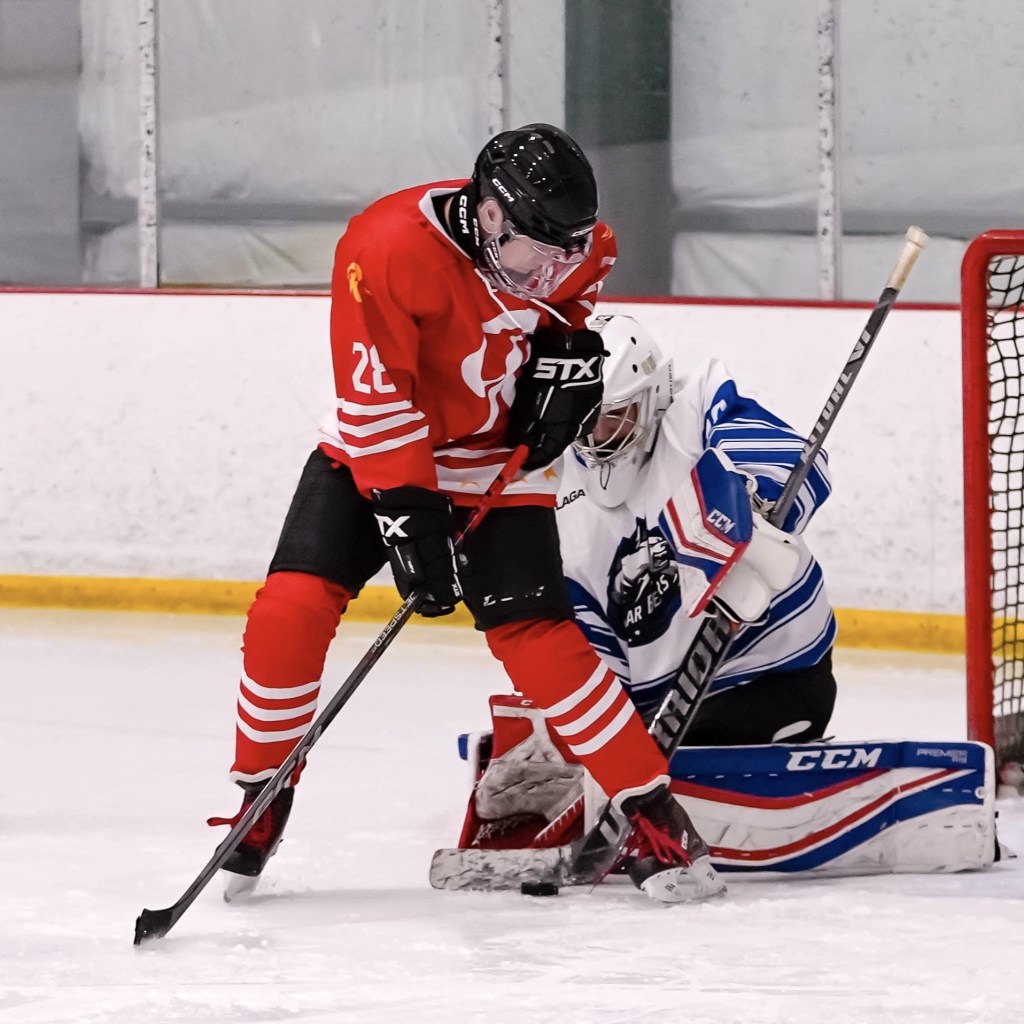
    “Feeeeeet!!!!” was undoubtedly the serenade from the bench when this was taken.

    Monday rolled around and I called the referral number. No answer. This is not particularly shocking even during non-holiday block leave timeframes, so I left a message and figured I’d get a call back in the afternoon.  Nothing Monday afternoon. I didn’t leave a message. I’m sure whoever the poor soul that was left on the ultrasound desk will get around to it before they leave tomorrow on Christmas Eve.

    Nothing on Christmas Eve. OK, understandable. I’ll for sure hear back from someone the day after Christmas.

    Nothing the day after Christmas. Shit. OK, time to go to the hospital in person.

    I made my way to the ultrasound scheduling desk and talked to a person that was scheduling other types of imaging. She said the ultrasound scheduler was out until tomorrow and she’d leave a note for me with her.  This was annoying, but pretty on-brand with bureaucratic inefficiencies that plague people-facing industries post-COVID, and is amplified by general military bureaucratic-isms that are more or less accepted as a part of life in this line of work.

    Friday morning I got a call when I was on my way to pick up the kids from their mother for my half of the winter vacation period, “Hi sir, can you come in tomorrow morning at 0600?” This type of speed between appointment-setter and appointment was nearly unprecedented in my career; I’d made the snap judgment to accept the appointment and deal with the childcare logistics on the back end, “Yeah, that works, no problem, I’ll be there.”

    Up to this point I’d made the deliberate decision to keep my mouth shut about “the lump” because, well, there wasn’t anything to say. I didn’t have any new information, I’m not going to get my parents all spun-up about nothing, and I wasn’t going to fuck up their holiday mood with some nebulous self-diagnosis. However, the aforementioned back-end childcare logistics means I was going to have to tell something to someone.  Enter Aunt Cathy.

    Aunt Cathy is my Dad’s older sister and just so happens to live about an hour north of me in Lake Stevens. She’s had just about every medical issue under the sun and if there was someone that would temper their concern with pragmatism, I knew she’d be that person. Plus she’s retired and I’m her favorite nephew, which pays dividends.

    After a brief call explaining the situation and my dire need of childcare, she did what any good family member does and stepped in without complaint. Her number one concern was me figuring out what this was.

    “Did you know Grandma had lymphoma? She beat it, but you should make sure you’re ok,” she said toward the end of our call.

    No, no I did not know that.

    ============

    Imaging Rodeo

    Aunt Cathy and her husband Chuck arrived right on time for me to blaze out of my house in Tacoma on 28 December. The lump hadn’t really changed much. At times it felt bigger, at times it felt smaller. This was reassuring in a way: cancer doesn’t just up and shrink randomly, right?

    I showed up to the general radiology desk in the hospital and was corralled by the ultrasound tech. For what CPT Bennett triaged as a “routine” ultrasound on my neck. In her defense, there was no reason up to this point to triage it as anything else, otherwise she’d have hauled me off to her ER homeland long ago.

    An ultrasound is a medical test that uses sound waves to create images of the inside of your body. It works by sending high-frequency sound waves through your body, and when these sound waves bounce off tissues, organs, or fluids, they create echoes. These echoes are then turned into pictures that doctors can use to see things like babies growing in the womb, organs like the heart and liver, or to check for problems in different parts of the body. It’s safe, non-invasive, and doesn’t use radiation.” – ChatGPT

    In reality, a non-OB ultrasound is performed by a guy that looks like you interrupted his DnD campaign to smear cold gel on your neck and rub a smooth piece of plastic over it for a couple minutes.

    Rounds complete. I had now completed all the tasks that my provider asked me to do. There was an ice cream’s chance in hell that I was going to get a call about this before everyone came back from the holiday block leave period so I managed the best I could in the “fog of lump.”

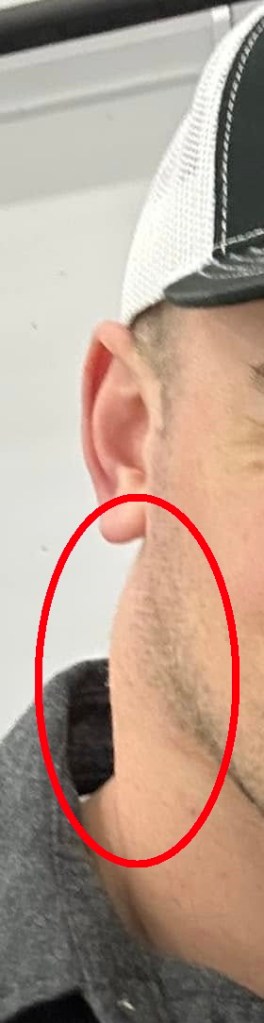
    In photos I definitely noticed it, and would purposely angle the camera away from it when me and the kids went out and about. There was no escaping it unless I’d kept people away from viewing the right side of my body. Even seeing it in photos made me uncomfortable and began to erode my confidence.

    “She’s Lump, She’s Lump, She’s in my head.”

    The radiologist and CPT Bennett came to the same conclusion in their interpretation of the ultrasound: there was a mass that was necrotic or cystic in nature in my lymph node, I needed an ENT referral, and a CT scan “with contrast” to get a better idea of what nefarious game my neck was up to. My labs, however, were perfectly normal across the board, with zero indications anything was going sideways. One might say my labs were… routine.

    “We can’t schedule your referral until you get the CT scan,” the ENT clerk said over the phone.

    “We can get you in in March, your provider listed it as routine,” the CT scheduler said to my face at the scheduling desk.  By this point, my nerves were starting to fray. The lump wasn’t going away, and it was becoming obvious to my caveman brain that this wasn’t “routine.”

    I looked at her coldly and pointed to the lump. I was having a big-lump day, “Well hopefully this doesn’t kill me before then.”

    She looked up from the screen, and the frankness of my statement broke her out of whatever script she had playing in her mind for this conversation, “Um, well, let me look and see if there’s anything sooner.”

    Low and behold, there was one about two and a half weeks away. I got that scheduled, and then called ENT back to set my follow-up to the CT for exactly a week later. I figured I’d have an explanation as to what was going on by close of business on 28 January. The worrying was going to be for nothing. It was probably just a cyst they needed to drain or, at worst, remove. Easy peasy.

    Life went on for three more weeks. I hung out with the kids, played hockey, went to work, prepared paperwork I had to gather for my reassignment to D.C. this summer, and tried to go on as if all systems were nominal. Because all systems were nominal. They were routine.

    “A CT scan with contrast is a special type of X-ray that gives doctors detailed images of the inside of your body. The “contrast” part means that a special dye is used to help certain areas show up more clearly in the images. This dye can be injected into a vein or taken by mouth, depending on the area being scanned. It helps highlight things like blood vessels, organs, and tissues, making it easier for doctors to spot problems, such as tumors, infections, or injuries. The scan itself takes just a few minutes, and the contrast dye helps improve the quality of the pictures for better diagnosis.” – ChatGPT

    No lies detected. I had to fast the night before, but otherwise, you get stuck with an IV, you lay down for the CT in a big MRI-esque machine, and you’re out of there. It was almost as uneventful as the ultrasound.

    This was the last anti-climactic medical appointment I am likely to have in 2025. 

    New year, new me (new me has cancer).

    The views and opinions presented herein are those of the author and do not necessarily represent the views of the Department of Defense or the U.S. Army.
  • Prologue

    Introduction

    Starting a blog is something that’s always been floating around in the back of my mind, but never a thought executed because I found it to be high-risk behavior in my line of work.

    See, I’m a “Public Affairs Officer” (PAO) in the U.S. Army.

    If you’ll allow me to paint with a broad stroke: A PAO’s responsibility is being the Army’s spokesman at the unit level; to be the tip of the spear (or in many cases, a shield for feces to be flung at because of poor/controversial command decisions) in the “information environment.”  If you’re a rational person, you can see how publishing a blog of personal thoughts could put me at odds with the position I hold at work, and my employer’s expectations of me in that role.

    So, in short, this page’s name isn’t just alliterative: I’m actually an Army Captain. As the title of this page also suggests: I have cancer. 

    You might think to yourself, “Wait, you said you are a Captain right? You can’t be old enough to have cancer…”

    You would be wrong in that assumption, although I wish you were right.

    ============

    High Risk Behavior

    More than one PAO has become persona non-grata in the career field, or in their individual workplace, for publicly airing a little too much of their personal feelings on some subjects. I’m not trying to create one of my own moments like that here, but I’m an active duty officer undergoing cancer treatment in the military medical system- from time to time things might slip out. I’m going to call them like I see them.

    Never fear, Congress of Colonels, I will always add the customary The views and opinions presented herein are those of the author and do not necessarily represent the views of the Department of Defense or the U.S. Army.” so that you and the Army can wash their hands of any of the goofy shit I say here in a media Response to Query (RTQ) or Holding Statement if I go terminal and let loose some unhinged rants.

    “The elites don’t want you to know that PPM rates have been cut by 50%!”

    I do not plan to go terminal, but only so much of this outcome is in my cognitive control. And as the popular staff officer saying goes: no plan survives first contact with reality.

    ============

    1000 PST – 20 December 2024

    (Author’s note: I’m using military date and time conventions because they make more sense and I’m going to force it down your throat like cancer forced its way into mine)

    I was two days removed from my return to my home in Tacoma, Wash. from Sagami Army Depot, Japan. I’d just completed the largest staff exercise my unit had ever partaken in, and in conditions that are best described as “the worst glamping trip you’ve ever been on.” 

    I was looking forward to playing hockey outdoors for the first time in Winthrop, Wash., at a rink on the eastern edge of the North Cascades, for a weekend-long veterans scrimmage tournament. It was projected to snow and while my little Corolla Hybrid is trustworthy and faithful to its purpose, its purpose isn’t driving in blizzards through mountain passes. This is how one of the heroes of our story makes their first appearance.

    Nicolette is a military contractor, and despite this handicap an all around good human. She’s the office therapist, financial counselor, honorary warrant officer, continuity, and dating coach. Like me, she is also overflowing with candor; we were natural friends from the start.

    We’d arranged to swap cars so I could, you know, not die crossing the Cascades to go play outdoor hockey for a weekend. See, Nicolette had just bought a brand new Subaru (sorry ladies, she’s straight and taken) which was the far superior option to my compact hybrid.  I’d arranged the swap for the morning I was supposed to leave. We were standing at her desk, chatting before I was to swap cars and hit the road, when she said it. The phrase that brought this story to life.

    “Hey, what the fuck is wrong with your neck?” she said, frozen in place across from me.

    “What do you mean? Nothing’s wrong with my neck. What’s wrong with your neck? Fuck you, Nicolette.”

    Then, I felt my neck, “Oh, shit, I don’t know, do you think I should go see the medics?” I said with a little surprise.

    “Yeah, dude, you should. Remember that time you thought I was gonna die when my face got itchy? This feels like one of those moments,” she said, showing genuine concern.

    In this instance, a few things happened that many people in the Army are not always accustomed to:

    1- The medics were actually in the aid station instead of the clinic. 

    2- A provider was actually in the aid station instead of the clinic.

    3- The aid station was actually open the Friday mid-morning before holiday block leave.

    Granted, I’m in a large headquarters and our medics are very communicative about their hours and duty locations, but I’ve seen too much of the other half of Army life, and my expectations of anything having to do with military medicine were still set, by default, at “hilariously low.”

    (Author’s note: I will not be referring to my medical team by their real names in this blog)

    CPT Bennett is an ER doctor by trade, but I’ve learned that the Army by and large doesn’t give a shit what your speciality is when they assign you to a unit as the provider; she happened to be the provider in the aid station when I walked in there to be seen about… whatever the fuck was going on with my neck. 

    After a screening exam she came to a shocking conclusion: my neck bulging out on the right was not normal. I could sense that this was going to be one of those moments where I see myself getting ready to limbo underneath that aforementioned low bar, but then something different entirely happened: She ordered labs and an ultrasound. She showed genuine concern. She eliminated every possible emergency scenario before cutting me loose. She was treating this seriously.

    “Will I die this weekend?” I asked as I put my shirt back on.

    “Probably not,” she said, “but never say never.”

    Fuck it, good enough for the government I work for. I’m gonna go play some hockey.

    I went to the military clinic I’m assigned to and got my labs done, since it was more or less on my way out of the gate. The ultrasound referral would have to wait until at least Monday, but whatever, that was a future me problem. It was probably nothing anyway.

    The views and opinions presented herein are those of the author and do not necessarily represent the views of the Department of Defense or the U.S. Army.