(Author’s Note: I am typing this under the influence of chemotherapy, please be gentle on spelling/grammar/formatting errors)
Hard Conversations
I finally had the conversation with my daughter. I had no idea what to expect, but after speaking with a social worker and her teacher beforehand I went in and felt like I was prepared for most outcomes.
She’s been through a lot in the last couple years. Her parents getting divorced, moving five hours away, and the ups and downs of the men her mother brings into her life (she has never met any of the women I’ve dated, let alone even had the idea I was dating anyone, for perspective). I knew this could be another tough pill for her to swallow.
I kept looking for opportunities for us to tell her together, but window after window kept closing and I knew I was finally out of time- I had to tell her myself. My mother had returned from Florida and was able to occupy my son so I could have the difficult conversation relatively uninterrupted.
She took it very well, partially because I don’t think she understands the gravity of “cancer” but she understood that it is serious and that the medicine they have to give me will make me sick, too sick to visit sometimes, and that her getting sick would also mean she couldn’t see me because I could get really sick from her. “Sick” and “medicine” were baseline terms that I used to explain just about the entire situation. There were a few misty eye moments but nothing she didn’t choke back on her own. Overall, it was a successful conversation about a difficult subject. Thank goodness for small wins.
============
Day Zero
Monday was spent gathering last minute supplies, doing my pre-chemo lab draw, and knocking out other small tasks that needed to happen prior to my treatment.
The military hospital is one of many teaching hospitals in the Army’s medical arsenal, and my phlebotomist was an AIT (military trade school) student being overseen by a Sergeant. I have a strong sympathetic response and I had a feeling I was going to be out of this young soldier’s depth. I was correct.
I have, by all accounts, great veins. I’ve never had someone “miss” the way this young soldier did. After one failed stick I was out of patience, because mentally this was not the day for this adventure for me, and I looked at the Sergeant and said, “OK, she’s done, you’re up.” and got my draw done promptly. Normally I’m a good to decent patient for students, but today was not that day. I wasn’t spending my last day of freedom getting my arms mangled by Private Pincushion.
============
Day One: Chemo 1 & Proton 1
I woke up, loaded my cooler (I brought cooling mittens, booties, and a beanie with gel packs in them because I’d been told it’s one way to fight neuropathy and hair loss), and packed up all my things. We drove to the Army hospital and parked in our designated spot, reserved for infusion patients, and began the long walk toward the end of the first part of my life. I knew, and know, this is one of the watershed moments that I will use to demarcate my life in the future.
After spending some time in the waiting area, I was brought back, the chemo port in my chest was accessed with a needle, and I was taken to my chair. They are oversized power recliners with hospital trays nearby. They gave me a cup full of pills and began running a liter of potassium chloride into my body through my port- apparently this chemo agent is hard on the electrolyte count. As soon as I exhausted that bag they got me started on my 1000ml (100mg) of Cisplatin chemotherapy the clock was on. I began diligently putting on, taking off, and reapplying my cold packs in between windows of time watching 1917 on my iPad.
I received the highest dose of Cisplatin they can give a person due to my age and fitness level, and I sat there and watched four other patients come and go in the time it took me to get my dose, ostensibly older and only getting weekly doses versus my three-week dose.
One thing they tell you to cut out when you start chemo is coffee, because caffeine dehydrates you, and chemo doesn’t need any assistance in dehydrating you. What they fail to mention however, is that you should wean yourself off of it and not just stop drinking fucking coffee on day one. I started to develop a significant caffeine withdrawal headache before half my dose was complete, which turned an otherwise benign experience so far into an uncomfortable one.
Fortunately, the only overarching discomfort I had was the headache and the constant need to pee from three liters of collective fluid being put into my veins over the last five hours (the treatment is bookended by another liter of potassium chloride).
Going home was relatively uneventful, as was the next couple hours. The proton therapy center had scheduled us in concert with the Army hospital to ensure we could be seen in the evening with enough cushion to arrive after chemo.
We arrived at the proton center and I was told the first day is typically one of the longer ones, as they have to take an x-ray to make sure my mask is still aligned correctly, and to get the permission to go-ahead with treatment that x-ray image would need to be approved by a doctor. Fortunately I was feeling ok still and withstood the additional delays well enough.
On the drive home I crashed right out in the passenger seat. Without fail, each day I pass out for a period of time on the drive back. Getting radiation is like spending a whole day out in the sun- it just sucks the energy right out of your body.
The next three days were generally uninterrupted by the underarching feelings of nausea and discomfort. Usually the morning, right when waking up, is the best I feel all day. The longer I lie awake in bed, the worse I begin to feel. My body only tolerates lying down for sleeping, otherwise I need to be seated or in a reclined position in order to not feel like total shit most of the time.
The saddest news I got this week came on, today, Friday, when my ex texted me to tell me our daughter was having flu-like symptoms. Seeing my kids was the one event I was looking forward to this entire week, and I knew that was about to be taken away from me for my own well-being. Talk about a gut punch.
In fact, I think I’ll wrap it up there for now, one shouldn’t be emotional and blog.
============
The views and opinions presented herein are those of the author and do not necessarily represent the views of the Department of Defense or the U.S. Army.
The time between my last appointment (the behavioral health referral mentioned in the last post) and today was marked by various degrees of normalcy, and with it, some renewed mental energy.
I was starting to endure a significant amount of stress, at least internally. Stress is really bad for you if you have cancer. Not only is there some research that suggests that stress produces hormones that aid tumor growth, but in me it manifests itself as a lack of appetite; this is a problem. For about a month now I’ve been trying to “bulk up” in anticipation of significant weight loss as my body responds to radiation and chemo.
Bulking up with fat is a massive chore for me. I’ve been walking around at the same weight for at least 15 years, and I have a high metabolism that drives that homeostasis. I’m very active: I routinely lift weights, I play hockey a couple times a week, sometimes more, and in the summer and fall I spend much of my child-free time in the backcountry scouting or hunting. Three weeks into this attempt to eat …and eat… I’d plateaued at 15 pounds gained. I’d ceased all unneeded physical activity, began eating calorie dense foods, shakes, eating between eating, and anything else that made sense.
15 pounds is all I could manage in becoming the most unhealthy version of myself. Frustration of this lack of weight gain was adding to my stress levels, which kicked off the negative feedback loop mentioned above. I was stressed because I wasn’t hungry, and I wasn’t hungry because I was stressed. To add to the stress from me trying to play Hungry Hungry Hippo-man, my neck tumor started to get weird.
My brand of cancer started in my throat, at the base of my tongue, and spread to the lymph nodes on the right side of my neck as previously established in this blog, but my neck was really starting to get uncomfortably large by mid-February. As more fluid and necrotic tissue built up, it began exerting pressure on my ear, jaw, and every other structure around it. This was both uncomfortable and alarming as the time ticked away between biopsy and treatment.
Then, for no specific reason I can identify, my neck lump began to rapidly deflate. It was almost perceptible: I was sitting in my new easy chair and noticed it start to feel. This is significant because other than pressure, it doesn’t have a sensation of any kind, so all sorts of thoughts began to race through my head. “Oh god, is it spreading somewhere else? Is that how it works?” Fortunately, I’m mildly retarded and this was just the ignorance speaking, as what is more likely (according to the internet, my ENT nurse never called me back when I left a message about it, so I assume it wasn’t life threatening) is that my body was flushing out the necrotic cells and fluid. However, because I didn’t know this at the time, I took it as a harbinger of my imminent doom. Enter more stress.
While I’m talking about being in tune with your body, let me just take a moment to give a shout out to women writ large: In my experience, women are always “listening to their body” and trying to apply self care for every little odd physical sensation, to include communicating it externally. This is not a common phenomenon for most men. We ignore our bodies entirely, accept pain and physical sensation as “welp, this is my life now” or “I guess I’m dying now, better clear the browser history lol.” Having a malignant tumor makes you, as I’ve heard Rena say, “a hostage in your own body” and not only are you hyper aware of your body, but every single little sensation triggers the, “oh God, this is the end, isn’t it?” I have no idea how women live like this. Ignorance is bliss.
============
Be Hard to Kill
I had a great weekend with the kids, all things considered, and we went to a local park on Puget Sound that’s known to host marine mammals at certain points of the year. I’ve heard that Puget Sound is experiencing an unsustainable boom in Harbor Seals at the moment, which is devastating the local salmon population and drawing in more Orca pods. Despite the ecological strife, they are kind of funny to watch, and we did for a time after a long walk along the coast to get to where they were hanging out.
This was the longest sustained amount of physical activity since my last skate on 10 February, and my body let me know it. Fortunately my son, who generally likes to be carried on my shoulders, was fine on his own most of the time so it wasn’t unnecessarily taxing, but between some kind of bad allergy attack I was having and the walk itself down the beach I was totally exhausted. I had to get them back home so I could relax and recover.
I was probably around my lowest point, mentally, of this interregnum between the flurry of initial activity, and the beginning of my treatment. Sunday evenings are usually tough days for me. I get to come back to an empty home, sometimes with toys still strewn about, and pick up the pieces of my weekend life. I wasn’t eating like I should have been, I was sleep deprived, stressed, and just not in an ideal place mentally. I needed to make a course correction fast.
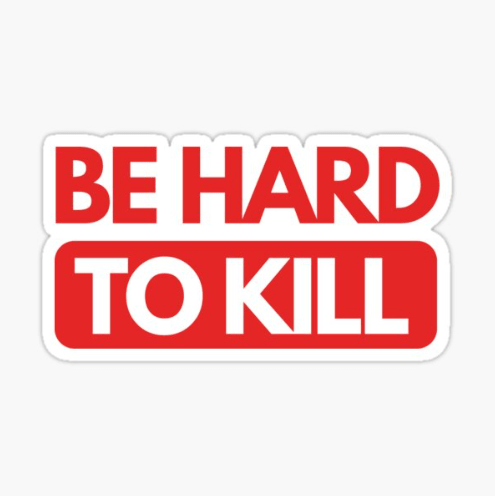
Monday I decided to put on my uniform and go into the office to try and feel some sense of normalcy, and it might have been the very thing that gave me some sense of renewed purpose. At some point in the day I remember sitting in my car and just saying to myself, “be hard to kill.” It was some saying I saw once on a moto-tshirt God knows where and who knows how long ago. The idea behind the saying is that you make yourself as strong and as capable as possible so that you become too difficult to attack. For whatever reason that morning, I decided that saying also applied to my current situation. I had to become hard to kill.
This could have been my million dollar idea but the bro-vet industrial complex beat me to it.
Just like that my appetite came back, I began checking off a bunch of things on my “to do” list I’d been putting off, and even got some minor tasks done at work. I even started to do something I’d been outsourcing to Addison previously, which was browsing Reddit for answers, and I started learning more about those like me- those who had had this condition, this treatment plan, and were in the middle of it or had survived it. It’s honestly something I should have taken responsibility for sooner, but I’m too stubborn for my own good sometimes.
This culminated in me (metaphorically) grabbing my nuts and going into dental to get a consultation with a dentist about my upcoming radiation and procuring the prescription dental items I will be using for the rest of my life. I walked in and was politely persistent that I needed to have a consultation with any dentist that had white space on the books. Fortunately they drummed up a guy that had some experience with oncology patients and he not only hooked me up with the prescriptions I needed, but talked me through what to look out for during and after treatment from a dental perspective. He was altogether much more competent than the guy I got my pre-radiation exam from and I felt like my preparations, medically, were just about complete.
Now if the proton therapy clinic would just call me to tell me what time I’m supposed to show up on the 17th…
The views and opinions presented herein are those of the author and do not necessarily represent the views of the Department of Defense or the U.S. Army.
A few days after I’d been seen at the university hospital I was scheduled to return to a different hospital campus in that same system a few exits further north, meaning in good traffic my daily drive would be at least an hour there and back. This is a long way to drive for medical treatment by any standard, but even more punishing considering that I live in the largest metro area in the upper left corner of the country. Most days I-5 is unforgiving at best; in the Puget Sound metro area this day was no different.
This is as painful as it looks.
At this point I was used to pulling up to parking meters where I’d have to take a ticket and remember to have the medical office validate it on my way out for large garages or sprawling lots at some medical mall, and this day was no different. I took my ticket, and pulled up to the building that had “PROTON CENTER” in giant letters on the outside. I was told that these buildings are actually built around the proton radiation machines due to their size. Big if true.
Walking in through the front door revealed the stark difference between a general hospital and a cancer center immediately. Huge cathedral ceilings, couches in a giant waiting area that had a library, a snack bar, wifi, and two receptionists and their assistants. This was like comparing my local county rink to an NHL practice facility.
I was greeted, a badge made for me, my parking validated, and given some paperwork to complete. I didn’t even have enough time to finish the paperwork before being called back to the “NASA” room where I was to see the first in a line of people that would be involved in my care. It’s called that because this type of therapy is most commonly given to pediatric patients and they’ve teamed with NASA to create interactive experiences to explain to the kids what is going to happen there. I was lucky to get a Star Wars band-aid at the doctor when I was a kid.
First up was the “Patient Navigator” which is basically a social worker of sorts. I was given a lot of information in folders about my doctor, the treatment, the care team, facility, and additional information on nutrition, side effects, and lodging for the area.
After that me and my mom were taken to a more standard clinical room where I was asked by the LPN to review my medications they were tracking and to take my vitals. She was followed up by my nurse, who gave me an IV port in preparation for my CT scan during mapping (the contrast fluid, like the others I’ve discussed previously, is given through an IV). Interestingly, she asked me if I wanted it in my chemo port or in my arm. I decided I wasn’t ready for the trauma of having a line run into my chest just yet and opted for a traditional arm vein. It came up during this conversation that my nurse also had a chemo port installed. I didn’t ask why, which I figured would be impolite, but my first reaction was no longer of curiosity, just sadness that another younger person has to walk around with this bullshit.
Dr. Panner was unavailable to meet with me, but it wasn’t really a big deal to me. He’s not some sort of final boss like a video game- he’s more of a supervisor. He checks, validates, and troubleshoots problems no one else can figure out. The LPNs, RNs, radiation techs, and the other worker bees are the ones that would handle me day to day so it was more important to me to see their faces.
The mapping process was virtually identical to the one I did at the Army hospital’s RadOnc, so if you want to relive that experience, check out this post. As soon as I was done, they said that I’d be starting in just over two weeks, to expect 33 treatments, and to expect a call within a few days of the start day to hammer out a report time. In the meanwhile I had appointments and other preparatory chores to keep me busy, but nothing exhaustive. I still had the big decision looming over where I wanted to do chemotherapy, but that wasn’t super pressing at the moment.
I discussed it with mom, and we decided it would be best for her to fly home for a couple weeks because there was no real purpose for her to be here if I wasn’t going to be starting treatment when we first thought on 3 March. She booked a flight out for the next evening and that ended part 1 of my mom as a caregiver. She made it to all the important appointments, helped me survive the tube and port placement, and was a forcing function to get me to address some tasks I know I’d have been overwhelmed by if left to my own devices. Good moms are hard to come by; I’m luckier than most in this regard.
The next morning I had hastily scheduled a dental cleaning since I had space in the calendar to do it now. Because I wanted one as soon as possible, the clerk at my dental office sent me to an office across post that I’d never been to. It was almost serendipity, because as it turns out, my hygienist was a cancer survivor. He had melanoma that spread to his lymph nodes and he told me all about his treatment and recovery. It was a different cancer with a different treatment, but a fascinating perspective. The cleaning was unusually gentle and fast and left me wondering if he had taken it easy on me because I was in the same club, or if my teeth were actually just that clean. I guess I’ll find out in six months.
After a fairly uneventful phone call with a different social worker at the cancer center pertaining to lodging assistance I was skeptical I’d qualify for, I said goodbye to my mom and hit the road to go get the kiddos.
============
The Decision
I had a pretty good weekend with the kids. My daughter played in her hockey game in the morning, per usual, then came home to work on a new puzzle I’d gotten her from one of the local thrift stores. It was 300 pieces, which was going to be a new record for her, and I wanted to give her some time to relax before we went to the park. It was going to be a ‘false spring’ day, sunny and over 60, so I was planning on taking them down to a playground near Puget Sound and letting them wear themselves out with the undoubted throngs of other kids.
I met an old Army buddy there with his kids and brought him up to speed with everything going on with my treatment, and caught up in general. We generally talk a lot of shop when it comes to hunting, and I lamented that I still have a bag hanging in a tree in the national forest with some of my hunting camp supplies. It’s 5 miles one-way to this bag; with a 2000 foot elevation gain and it stays snowy until after Memorial Day… yeah it’s gonna be up there a while longer.
My son, who is barely removed from being a toddler and has some sort of developmental delay to boot, started melting down and I knew it was time to go. He was upset to have to leave but was generally moving with us toward my car. Then the fucking ice cream truck showed up.
Giving this thing the title of “ice cream truck” is pretty generous. Some of you are already picturing what I’m talking about. This thing was a minivan that probably had a salvage title, a bunch of coolers in the back, and “not for individual sale” ice cream bars and sandwiches being hawked from it. The poorly adhered labels on one side and obnoxious music blasting from it were the chef’s kiss on this tetanus-mobile. Under no circumstances would we be getting ice cream from this thing.
This is the Rolls Royce version of what I described above.
My son had other ideas, and at first I had to grab his hand and pull him along, then he went dead weight and had to be picked up. I slung him over my shoulder as he had a meltdown and eventually got him into the car. He viciously resisted being put into his car seat as the meltdown continued, using all the physical tools at his disposal. Normally this doesn’t bother me, as I will always win this contest, but in this instance I was nervous he’d grab at my tube or headbutt my port. Fortunately he didn’t, and by the time we got home he was done giving us a piece of his mind.
The start of the next week was ushered in by me throwing on my uniform and showing up to the office. It was about time I rolled in and started chipping away at what few tasks remained on the docket. Right after lunch I decided I’d had enough and left to see about some prescriptions and other admin items that I needed to get sorted out. I felt as normal as I could tolerate for half a day.
I had my mandatory referral to behavioural health, specifically a clinical psychologist who sees cancer patients, the next day. It only took me four tries to get to the right office, as the annex I went to was loaded with ambiguous titled BH offices. Once I made my way to the correct place I filled out more paperwork, and was sat in front of a computer to do a fancy screening to make sure I wasn’t going to kill myself of others.
I sat down with the psychologist and began to talk about the results of the screening (I passed with flying colors, you all are safe… for now) and a variety of subjects. He assessed that I was very resilient and had a good support system, so that if I wanted to come back I could do so on an “as-needed” basis. I am choosing to believe he is right and this is one appointment that I can permanently shed.
It was around this time I started to solidify the decision about chemotherapy in my mind. The choice was: move my chemotherapy and all my specialty referrals over to the cancer center, or keep it all at the Army hospital. Ultimately I decided to keep it all at the Army hospital. Logistically speaking while yes, I’d be driving to the cancer center every weekday, over the long term and in acute instances I’d be seen at the Army hospital and it just made more sense to keep as much under that umbrella as possible.
While this was 100% my decision to make, I still felt a great deal of relief calling the cancer center to cancel my onboarding appointment with them later the following week. It just made sense, so, naturally, I fully expect this to blow up in my face. Old habits die hard; in this case in the pursuit of not dying at all.
(Author’s note: This may be the penultimate or final ‘prologue’ entry. Stay tuned)
The views and opinions presented herein are those of the author and do not necessarily represent the views of the Department of Defense or the U.S. Army.
Monday was supposed to mark the beginning of my last week of normalcy, or what I’m beginning to recognize will be “old me” in a few months. Instead, Monday upended my entire treatment plan and injected chaos into my care team.
When I hit the road to Seattle to visit the local university cancer center, I felt like I was checking another block- just another task to complete on the road to treatment. I was going there to get a second opinion, on the referral of MAJ Rafferty from RadOnc, to see if I was a candidate for “proton therapy.”
“In very basic terms, the main difference between proton radiation therapy and photon radiation therapy is the type of particles used to deliver the radiation.
Proton radiation therapy uses protons, which are charged particles. These protons release their energy mostly at a specific depth in the body (called the Bragg peak), so they can target tumors very precisely with minimal damage to the surrounding healthy tissues.
Photon radiation therapy uses photons, which are light particles (like X-rays). These photons release their energy as they pass through the body, meaning they can affect both the tumor and the healthy tissue along the way to the tumor.
In summary, proton therapy is more precise and may spare more healthy tissue, while photon therapy is more commonly used but may affect more surrounding tissue.” -ChatGPT
To make this into a military analogy: Proton therapy is a sniper rifle trained on a specific target. Photon therapy is a hand grenade addressed “to whom it may concern.”
MAJ Rafferty knew that proton therapy was not widely practiced on adults (it’s mostly a pediatric therapy due to the smaller impacts on long-term quality of life) but wanted to see if I was a candidate “because of my age.” At 38 years old I was now suspected to be more in league with an eight year old than an 80 year old. What a time to be alive.
After, yet again, being the youngest person in the waiting room by several decades, I was seen by a RadOnc resident where I was immediately told I was a good candidate. The RadOnc head and neck specialist, Dr. Panner, then came in and, in very monotone serious terms, explained that not only was I a candidate because I (ostensibly) have a lot of life left to live, but also because the cancer is in a sensitive area. He immediately wanted my consent to treat me and to consolidate my care under the university hospital cancer center umbrella. Life comes at you fast.
I told him how important it was for me to hear from my team of Army doctors that they agreed with his proposed treatment plan and that they should be able to reach a consensus with him. I knew them and trusted them, so it was important to me that they blessed off on his proposed treatment too. Fortunately, his treatment plan was virtually identical minus the change in location.
This was a lot to take in in the span of minutes. You know what else is a lot to take in? Another scope to the face. Dr. Panner decided this was an excellent opportunity to teach his resident how to perform an oropharyngeal scope. I anticipated this, to some degree, but that didn’t make it any more pleasant. The scope itself doesn’t really bother you: it’s the numbing agent. It happens as a nasal mist that then runs down the back of your throat and, before it numbs anything, tastes terrible.
It was late by the time we left the university hospital, and there wasn’t an opportunity to communicate my news to my Army team of doctors. First thing the next morning, however, I fired off a series of emails to my doctors to let them know what happened the afternoon prior. Closely after that, my ENT nurse called me to ask me what I wanted to do. I told her that, pending the input of the Army doctors, it made sense to me to keep all my care under the same banner, but not to turn anything off yet at the Army hospital.
Enter another agent of chaos: I was then called by the proton therapy scheduler, who told me I’d be coming in Thursday afternoon to repeat the mapping process I mentioned in an earlier blog post, but she also told me that the chemo center was backed up so I should proceed with doing everything at the Army hospital since it was already set up there. Fair enough, works for me, I guess I’ll do that. It just so happened I was on my way into the Army hospital to do my “chemo class” anyway, so I could socialize all this there.
While I waited in the MedOnc lobby I experienced an interesting phenomena: my doctor did a drive-by on me by grabbing me out of the waiting room (I wasn’t scheduled to see him as part of this class) and discussed the news of Dr. Panner’s office’s findings. He agreed with pursuing proton therapy and keeping chemo concurrent. I interjected to let him know that all was well in the world because they had just told me on the phone to maintain my treatment plan sans radiation at the Army hospital. All parties believed this was a good thing, but he raised the issue that traveling an hour north and south every day might eventually get difficult on me. This was a reasonable concern, and we brainstormed with the social worker, who approached us in the hallway, on how we might address this. The downside to being a broke-ass Captain is that while I make a lot of money on paper, roughly half of it flies out the window due to reasons previously mentioned in this blog; lodging assistance would have to come from private sources (if at all). Otherwise, the drive was the drive and I either wanted to live or I didn’t.
I did an abbreviated version of chemo class. It was supposed to go longer, but once I realized the nurse was just going to read to me I asked her to hand over the materials for my later review and give me the grand tour. I met the staff pharmacist, looked at the chairs, and asked some questions about what I was allowed to bring and what they provided in house. Turns out chemo is a four to six hour ordeal in my case, so chargers and devices are a must-have.
I left feeling that, while logistically sub-optimal, this would be the path going forward. I was slapping the table and this would be the way. I wasn’t going to wait until April when chemo was available.
============
Godfather’s is open. Right? Guys?
When I was in my late teens me and three of my friends would pile into one of our cars and act like complete morons around my hometown of Kalamazoo, Michigan. We had someone from every demographic of dork-dom. We had Ted, the transplant New Englander who hadn’t figured out he was too sophisticated for us yet. Brad, the short chubby nerd. Mike, the goofy meathead. And me, the cynical asshole. We, as most men can attest, showed our care to each other by constantly harassing and berating one another. Real big “I hate you all but I’d die for you” energy that, so far as I’ve observed, is only common in male friendship circles.
We were cruising the mean streets of “The Zoo,” trying to figure out where we were going to eat, and in so doing also be obnoxious menaces to the general public (it was almost always Steak n Shake).
As we brainstormed somewhere other than Steak n Shake late at night, there was a period of silence when all you heard was Mike meekly saying, “Godfathers is open? Right…? Guys…?”
Me, Brad, and Ted all contemplated this briefly, and in unscripted moment of perfect unity turned to him and said, “MIKEY, SHUT THE FUCK UP.” It was poetry. When other people want to make a statement with an increasing lack of confidence, the common cultural reference is “I’m Ron Burgundy?” – we have “Godfather’s is open. Right? Guys?”
The next agent of chaos came in the form of a phone call the next morning. She was a nurse with the MedOnc team at the university hospital and wanted to know when I could come in for chemo lab testings. Uh, what? I explained to her what the RadOnc scheduler had told me from her same hospital and she was perplexed, as she didn’t know why they’d say that because they could absolutely get me in to start chemo on time with proton radiation.
“Do you still want to go ahead and make an appointment?” she asked.
“Godfathers is open. Right? Guys?”
The views and opinions presented herein are those of the author and do not necessarily represent the views of the Department of Defense or the U.S. Army.
I have a long history with being in the water. In high school I was coaxed into joining the varsity swim team by the JV football head coach who was, not surprisingly, the coach of the boy’s swim program at my school. He was passionate about coaching, but unforgiving as a designer of practice routines. Treading water was a favorite of his. It’s also a big part of the Army’s combat water survival test.
Treading water is the act of staying in one place and remaining above the water upright without floating. This means remaining stationary by kicking your feet while pointing them straight down and paddling your arms in small motions so you don’t inadvertently float on your front or back. There are different techniques to do this to conserve energy, but when done for long enough, especially after a taxing swim, it can quickly turn into a slow descent to hell if floating on your back isn’t an option. Exhaustion slowly consumes you until you just want to swim over to the edge of the pool and endure whatever verbal abuse awaits you for wanting a break.
The week started off simple enough with a mid-morning appointment to speech therapy, with an afternoon appointment with the geneticist. Now I don’t have a speech impediment or learning disability, at least diagnosed, but the speech therapist is all-things mouth and throat muscles. One of the wonderful potential side effects of radiation therapy is long term difficulty swallowing, and they needed to get a baseline measurement of basic mouth muscle function to assess where I am at post-treatment so a rehab plan can be constructed when I make it to the other side of this thing.
The speech therapist had been doing this since I was born, quite literally, and was a very charming older woman that took literal measurements of my mouth and throat, and observed me drinking water and eating crackers to see if I looked… normal? I actually have no idea, but it passed the common sense test so I didn’t ask what she was looking for specifically other than knowing whatever tests I was given were passed without issue.
After some “empathetic listening” to my tale of woe, she offered to pass my information on to another active duty soldier that she regularly saw as he rehabbed from his own head/neck cancer that received similar treatment to mine. I was absolutely craving to talk to someone with firsthand experience of what I am about to endure and jumped at the opportunity.
Later that day I stopped into the place where the geneticist hides out; I only mean that in slight jest as the hospital directory makes no mention of their office and they are buried deep inside a pediatric care clinic. The reason? She mostly serves to perform genetic testing for parents that might be passing on spicy DNA to their newborns such as chronic diseases and other ailments. In my case, MAJ Rafferty saw enough family history of cancer in my family to auto-refer me to this office. After a pleasant talk with the geneticist, she didn’t believe my cancer warranted any immediate genetic testing since its markers were not genetic in nature and it didn’t present itself elsewhere in my family. She did agree though that it would be worth it to come back in after treatment and discuss a test to see if I’d passed on any other cancer markers to my kids. I might just take her up on that offer.
The next day I made my way to the audiology clinic because one of the often overlooked side effects of cisplatin chemotherapy is hearing loss, with the best case being amplified tinnitus (just about everyone in the military, especially the GWOT generation like me, has tinnitus) and some sort of higher-frequency loss. The audiologist, as in THE audiologist- not a tech, was there to perform a higher level of hearing exam than your standard “press the button when you hear the beep.” I underwent a comprehensive exam to establish my baseline because, in reality, hearing aids are likely going to be part of “new me” when I get on the other side of this.
IYKYK
The hearing exam itself isn’t invasive, but it does take a while and involves not just headphones and buttons, but other diagnostic tools and even speaking back words that you hear. Overall my hearing is, somehow, in decent shape at the moment- perhaps the biggest surprise of the week up to this point.
This brings us to Thursday, and my second consultation with Dr. Ferrell at MedOnc. This was a replay of our first meeting with more questions and explanations of the side effects of cisplatin, the chemo agent, as my proposed course of treatment. We discussed my pending appointment with the civilian cancer center at the University of Washington to discuss my candidacy for a newer type of radiation, and what impacts that might have on my treatment plan. Ultimately, I signed the chemo treatment consent form and scheduled a “chemo class” for the next week so I could, like any other part of the military, be trained on how to prepare for my two to three rounds of four-hour chemo treatments.
Finally, Friday, TGIF, no medical appointments… but still relevant medical news. Dr. Shannon, the ENT oncologist from the local civilian hospital, called me back with the results of their own tumor board first thing in the morning after he left it; they concurred with my Army hospital team’s treatment plan with the exact same conclusions about my variety of cancer. In a way this was a relief: now I knew that surgery was off the table altogether (for now) and I could focus on the sure-fire treatment plan of radiation and chemotherapy.
Now, I realize that was a dry list of appointment summaries, but that is my daily existence. Medical appointments, preparing my home for the next few months, flushing my feeding tube, showering (which is its own laborious process when you have medical shit sticking out of your body), and corresponding with people.
============
There are dozens of us, dozens!
Friday morning I met with the gentleman (we’ll call him Trevor) that the speech therapist put me in touch with, and we met at a local Starbucks to swap tales of woe.
He was diagnosed with a different flavor of head & neck cancer in 2023 and was about a year into his recovery; he had been seen by civilian cancer treatment providers at a hospital center south of the Army installation because, at the time, the Army hospital was short staffed. The only overlap we had in providers was the speech therapist, one of the ENTs we both see now, and the nurse case manager. We weren’t there to talk about that though: this was basically a gentle interrogation; I absolutely grilled him on treatment and side effects.
Trevor painted a grim picture. Neuropathy that made hiking on anything but a flat surface very difficult, limited range of motion in his neck, and he’d only recovered 50% of his stamina in the last year. This man works in special operations and his pre-cancer hobbies were mountain endurance races and long distance road biking; if anyone was going to recover quickly it would be him and the fact that he wasn’t scared the hell out of me.
He had to modify the trigger on his rifle so that he could feel himself pulling it, and he didn’t trust himself walking anywhere other than flat ground. He told me how he got severe infections and feeding tube failures that caused a few overnight hospital stays. He told me how he gets throat dilated because it isn’t healing correctly. What. The. Fuck.
No thanks, I’ll just die.
Trevor’s story wasn’t one of hope to me: it was one of survival. Like Hugh Glass scratching and clawing his way back to civilization. My morale was crushed.
I had a hunting trip that ended like this once.
Everyone I spoke to later that day tried to talk me back down to Earth and tell me things I already knew: Everyone’s cancer is different, everyone’s treatment is different, everyone’s response to treatment is different, and everyone’s recovery is different. I know all of these things, but, still… Jesus Christ man.
One of the silver linings from my discussions with Trevor was he began to dump resources into our text chat that I didn’t know about- different programs that might help speed recovery along if I can manage to get the Army to pay for it, or at the very least, approve the time off. Something to look forward to trying, at the very least.
============
The Salvation Army
During the week covered in this entry I finally lit the beacons: I posted on Facebook ways people could help. Those that know me best know how difficult for me this was. I am typically a private person, at least digitally, and asking for any kind of financial help is almost unheard of. In fact, outside of my divorce, I can think of maybe only 1-2 times in my entire life I asked someone to borrow a significant amount of money.
Yes, I’m a Captain and, on paper, make good money, but I get absolutely butt-fucked by child support, alimony, childcare, and other divorce-related debt. So I still live on cherry lieutenant money at best. Couple that with living in a high cost of living area, and having to take on a live-in caretaker, and making large diet and lifestyle changes with little warning, and financial turbulence follows.
I decided to act, and made an Amazon “cancer wish list” for supplies I knew I’d need, or at the very least would make life easier during treatment and recovery. The response from my family, friends, and acquaintances was overwhelming and immediate. Within minutes the list started getting exhausted, and over the next week I was getting body-slammed by the post office, UPS, and FedEx. The amount of support people showed was surprising, and touching. People I hadn’t heard from in months, or even years, came out of the woodwork to send something I needed like the adhesive patches needed to take a shower with a feeding tube, or things to make my life more comfortable like a heated blanket.
If you’re reading this blog, and you want to help out, I would appreciate it if you made a donation to one of these organizations so that we can find better ways to prevent, treat, and cure cancer:
After meeting with Trevor I hit the road. I travel 158 miles to and from a Walmart in Oregon almost every Friday and Sunday to collect my kids from their mother, with few exceptions. The drive itself is manageable. Typically I listen to audiobooks, music, or catch up on the phone with people. Collectively in the winter time, it’s probably the largest chunk of time I have when I’m awake and alone in a given week. This is amplified now that my mom is living with me for the next few months while I navigate this chapter of my life.
This was going to be the weekend I told my oldest daughter about what was happening, within the limits of her ability to understand it, and I thought it was important that her mother was part of the conversation. After talking it over further, however, we decided to give it another week. The trick here was I had to explain to them that “dad has an ouchie on his stomach and you have to be careful.” Fortunately, that was the limit of their curiosity for the moment.
My daughter plays hockey every Saturday morning. It’s one of the few staples of normalcy she gets to cling to from her old life when her parents were still together. With my mom here this presents an opportunity for her to enjoy this time even more because now I can be more of an active participant in it. See, her brother is a ball of destructive energy that requires constant supervision or he will do something to kill himself or others through his acts of daring. This means instead of watching her play, I have to follow him around the rink to ensure he’s not causing a major incident or earning himself a trip to the ER. Enter grandma.
My mom has been a saint for this entire episode and the fringe benefit this early into the journey is some help with the kids. When you’re a single parent you are playing zone defense most of the time when multiple kids are involved, so it’s nice being able to play “man” and devote attention to one at a time. My son stayed home with his grandma and I was able to give my daughter the attention she needs and deserves from her dad in this setting.
In fact, because the rink staff is terminally shorthanded, I volunteered as one of the bench coaches for her game. At her level of hockey this means that I make sure everyone is taking turns as a goalie, they are getting in and out of the bench area on time, drinking water, gear is on correctly, and keep them from doing dangerous stuff on the bench. My daughter was thrilled to not only have me able to watch more than 10% of her play, but she could actually talk to me between shifts and be able to hear me give her feedback on the ice. Thanks mom!
I had a good weekend with the kids. I even got to take my oldest to the local junior league game thanks to a donation from a hockey family we know, and my daughter had the best time. She gets to watch hockey, talk to people, dance every few minutes, and hang out with dad. I get to watch hockey and watch her have a great time; you can’t ask for a better dad/daughter date.
(Author’s note: I don’t know if this is the penultimate prologue entry, or if there are more to come due to a recent development in my treatment plan that might throw a wrench into the timeline. Stay tuned, I guess?)
The views and opinions presented herein are those of the author and do not necessarily represent the views of the Department of Defense or the U.S. Army.
(Author’s Note: This is almost the end of what I call “The Prologue” as this entry will bring us one post closer to the present and what I’ll call the “Treatment” entries. Everything after will be as close to the present as I can manage.)
You’re Young Enough.
Trying to go to sleep the first evening back from the hospital was a chore. I’m not someone that can easily fall asleep on my back, and rarely on my actual side. Typically I sleep as if I’m in the prone unsupported position with a pillow under my arm to combat a pre-existing nerve condition I’ve been battling over a year called ulnar tunnel syndrome. On my stomach was a non-starter with the fresh tube hanging out of me, and the pillow was going to dig right into it. Fuck! On top of all the other jarring changes I just underwent, now I had to change how I slept, too.
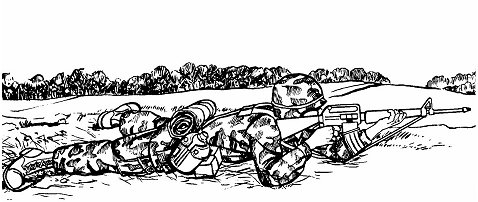
“Basic Prone Unsupported Firing Position. This firing position (Figure 4-22) offers another stable firing platform for engaging targets. To assume this position, the soldier faces his target, spreads his feet a comfortable distance apart, and drops to his knees. Using the butt of the rifle as a pivot, the firer rolls onto his nonfiring side, placing the nonfiring elbow close to the side of the magazine. He places the rifle butt in the pocket formed by the firing shoulder, grasps the pistol grip with his firing hand, and lowers the firing elbow to the ground. The rifle rests in the V formed by the thumb and fingers of the non-firing hand. The soldier adjusts the position of his firing elbow until his shoulders are about level, and pulls back firmly on the rifle with both hands. To complete the position, he obtains a stock weld and relaxes, keeping his heels close to the ground.” – U.S. Army Field Manual 3-22.9 “Rifle Marksmanship
My exhaustion overcame me and I managed to fall asleep listed to my side like I was back in the hospital bed. My abs were still weak and would remind me of the new hole in them whenever I did anything resembling sudden movement, so I wasn’t terribly worried about rolling around. It wasn’t a very restful sleep; there was a lot of tossing and turning, but eventually this wreck of the Cancer Fitzgerald sunk into the bed long enough to have sleep that was unbroken by vitals checks and vomiting.
There was no rest for me, however, as I had referrals to go to the next day. First up was with the ENT Oncologist, a civilian specialist at a nearby civilian hospital. Despite the recommended treatment from the tumor board at the Army hospital, they hinged it on, “but still go see Dr. Shannon, we want to know what he thinks.” So here I was, crouched over my Army hospital-grade walker in the frozen parking garage of the hospital with my mom, inching my way toward a second opinion.
Dr. Shannon’s office was unremarkable… with the notable exception of my presence in the waiting room. Every other patient in the room was old enough to have one foot in the grave, and all of them stared at me at one point. Me in my walker just waiting to be called back; I could feel their bewilderment. This was as close to feeling like Rosa Parks in the wrong bus section as a young white guy can get.
After being called back I scooched my way into the exam room and sat in the upright padded exam chair for what I knew was going to likely happen here: another scoping.
When you get scoped, it means they are shoving a camera into one of your orifices to do a visual inspection. In my case, this involved taking a camera on a flexible metal hose, a little smaller in diameter than a soda straw, and sliding it up my nose and into the back of my throat to take a look at the tumor (see this post for an example of what a scope sees).
I was correct. Dr. Shannon scoped me, did an exam on my neck, and asked me some questions. He’d already seen all of my imagery from the Army hospital, and had spoken to Dr. Sierra about my case. What he thought about this was not only going to be factored into my care team’s decision making process, but my own, as he was a regarded specialist by them.
He recommended against surgery. Whew? I guess this is the part where I started to repair my battered trust in the medical establishment after the last 48 hours: This guy had nothing to gain by recommending I not do the very thing he and his hospital profited from. My ENTs were not certified to do this surgery, so it would have fallen to him, and he knew that. Yet, he agreed with their treatment plan to the letter, and explained why. In this world, professional ethics are under siege across society, and this man held the line. Bravo, Dr. Shannon, bravo. (I suppose it also didn’t hurt that one of my colleagues’ wife is his colleague and name-dropped me prior to the appointment. Hooray for serendipity.)
Next up was a ride to the Army hospital for my first meeting with the Medical Oncologist (Med Onc) chief, Dr. Ferrell. Dr. Ferrell was very highly regarded by everyone on the Army medical staff so far that mentioned his name. A “made man” of sorts, because not only had he been doing his job in the hospital for a long time as an oncologist, but he was also a full bird Colonel in the Army Reserve in the same capacity.
I once again sat in waiting room with my mother, where everyone else was 35+ years my senior and clearly had spent a lifetime around loud noises, as the two men talking to each other next to us demonstrated with their loud voices and the constant use of “WHAT?” I was again viewed with a curious eye as I plopped into the seat from my walker.
The Army is, culturally, a strange place. Army hospitals are not exempt from this. We have expensive, complicated, digital systems that store all of our information from clothing issue records, to administrative files, promotions, and yes, medical data. Despite this, either out of habit or convenience, many of these offices require paper forms to be filled out that force you to recall all of the information that could be pulled up in a few mouse clicks with the proper permissions. I was just about at the end of my rope with this.
I took one look at the very poorly photocopied forms and started to get into a bad mood, either from stress, frustration, sleep deprivation, pain, or some combination. I filled out the administrative data and wrote on them, “All of this information is visible in my digital record” and turned the forms in. One of two things then happened: either the clerk at the desk stuck the forms into some folder that will never see the light of day, or less likely, they understood they were just going through the motions with this practice and my small act of medical disobedience was understandable.
Dr. Ferrell came to greet us and walked us back to his office. He had the air of someone who was quietly, calmly, confident, but was ready to be proven wrong- my kind of guy. We talked through his role in my treatment: he was to oversee the administration of my chemotherapy treatment.
I absolutely hammered him with questions. This was the guy I really wanted to talk to since this whole thing kicked off and he was able to answer all of my questions, or at least satisfy my curiosity. He went over the treatment plan and told me I was going to get the most aggressive treatment for my cancer, because, “you’re young enough to handle it, and it’s unlikely we will damage your kidneys.”
I am so tired of hearing about how young I am.
============
America, Tkachuk Yeah!
Cisplatin was the name of the drug I was prescribed in my treatment plan for chemotherapy, and I was prescribed the maximum dosage to work in concert with my radiation. Potential side effects: hearing loss, kidney damage, immune system degradation, hair loss, and sterilization. Another fun grab bag of side effects to mirror the hellscape that radiation therapy also presented.
It was at this time that the possibility began to creep into my mind that this cancer wasn’t just trying to kill me, it was trying to kill my Army career. Some of the side effects from the treatment of this condition are career-enders, in either a medical “chapter” (discharge) or medical retirement, and that wasn’t an outcome I’d considered until I had some time to piece that together in my mind.
Take one brick of stress off, replace it with ten more.
The next day, however, radiology oncology (Rad Onc) techs started to second guess some of the worst of the aforementioned side effects based on their experience when mapping me. They told me that a number of their head and neck patients kept their hair, and told me not to shave mine down preemptively like I’d planned, because it would screw up the mapping process later.
Mapping involved a few interesting experiences. I showed up, again with my mother who by this time was amassing a phonebook-sized folder of medical paperwork to tote with me to each appointment, and was called back by the two Rad Onc techs that would be handling my treatments. The only previous instructions I’d received were, “be clean shaven for mapping, and each of your treatments” and while I mourned the loss of my mustache, it was for a greater good.
I had to make a mouthpiece first. Anyone who has made a mouthpiece for contact-sports knows that this involves heating up a piece of solid mouthpiece-shaped rubber and then softly biting into it until it cools around teeth to ensure proper fit when you need to wear it. The second part of mapping was having a giant head and shoulder soft cast made from a pliable mesh material that also was heated up… to make a mouthpiece-type impression of my upper body. This process was very thorough, as this mask had to hold my head perfectly still each time at each treatment. Any margins or gaps would mean having to have the mask re-made and I’d have to be remapped. The mouthpiece I’d just made was clipped into the mask perfectly, and they tested the fitment of the whole system with a fancy machine that was similar to a CT in many ways. Last I was punched with a tiny tattoo of infrared ink on my chest for the laser to read each time, and that was it. Rounds complete: I was a ‘go’ at this station.
One thing I’m really glad the techs did prior to leaving was offer me a tour of the radiation therapy suite. I took them up on this and was guided into a room that looked like some sort of chamber from the Death Star. I suppose this is oddly appropriate since the cancer will likely view this the same way. There’s a flat table that a machine revolves around and shoots radiation in photon beams into the tumor. The whole process is supposed to last only a few minutes; you spend more time in prep and tear-down than you do actually getting zapped.
The next day I went on a date with Addison to our local junior league team and she’d gotten us seats just two rows up from the penalty boxes, which was a fun experience given how much fighting goes on at the lower levels of hockey. As previously mentioned, Addison is Canadian by birth and had a rooting interest in the “4 Nations Faceoff” tournament as Canada and the U.S. were playing while we were at this game.
I’d fully planned on leaving it alone, figuring Canada’s absolute star-studded roster would roll through every other team, so no shit talking would’ve bore any fruit, but once Canada went up 1-0 she couldn’t help but start in on how, “The U.S. needs to be humbled.” This coming from a citizen of a country that wins 75%+ of international hockey tournaments and still provides the plurality of NHL players was rich, so when the U.S. took the lead off of Dylan Larkin’s unassisted goal and then hit the empty-netter at the end to win, I let her have it. It wasn’t until after the game ended that the highlights rolled into my phone of USA’s Tkachuk brothers being two thirds of the fights in the first nine seconds of the game. USA, USA, USA! I let her have it the rest of the evening, and the following day, as Instagram put forth some wonderful reels equating them to the Smash Brothers from The Mighty Ducks franchise.
It was a critical morale boost as I began to truly contemplate what future me would look like.
The views and opinions presented herein are those of the author and do not necessarily represent the views of the Department of Defense or the U.S. Army.
There are going to be topics we circle back and revisit out of order from time to time, because when you don’t decide to write a cancer blog until eight weeks after first detection, things are lost in the whirlwind of activity that happens during the opening salvo of medical intervention.
Rewind to 1 February. In Ireland, and places with other strong Irish-Catholic communities, there is the “St. Brigid’s Eve” tradition.
“St. Brigid’s Eve, celebrated on the night of February 1st, which is the eve of the Feast of St. Brigid. In Irish folklore, St. Brigid is considered one of the patron saints of Ireland, and her feast day marks the beginning of spring and the Celtic festival of Imbolc, which celebrates the coming of the lighter, warmer days.
One of the customs associated with St. Brigid’s Eve involves hanging cloth or rags on a tree branch or a bush. This is often done as part of a ritual to honor the saint and invoke her blessings for the year ahead. The act of hanging the cloth is meant to symbolize the blessing of the home and protection from illness and misfortune, as well as a way of asking for a bountiful year.
St. Brigid herself is often associated with healing and fertility, so people believed that by hanging cloth on the branch, they were invoking her powers for good health and protection. In some variations of the custom, people also would tie pieces of cloth to the branches and leave them for the night.” -ChatGPT
One such place that this tradition is celebrated is Newfoundland, Canada, where Addison is from. We were walking into my house the evening prior to the Vancouver visit and she said, “Shit, I almost forgot.” and proceeded to take off her cloth wristband and tie it to one of the shrubs in front of my house.
Me, puzzled, “What are you doing?”
“It’s Saint Brigid’s Day, we are going to leave it on this bush tonight and in the morning you are going to wear it for the rest of the year to bring you healing. It’s Newfie Irish-Catholic woo-woo shit,” she said, matter of factly.
In the morning, as we headed out the door to go on our trip, she took it off the shrub and put it on my wrist. I figured at this point I’d take all the help I can get and, if nothing else, it would make her feel better.
Fast forward a day. 3 February was like most other Mondays where I roll into the office and get hammering on whatever task I was dealt for the week. My boss had already begun to slide things off of my plate and had all but cancelled my two-week trip overseas happening later in the month, so my task list was shrinking with every new piece of medical information coming to me. I kept chipping away at my inbox when I got a text from my mom: a link to some sort of Catholic site describing Saint Blaise Day.
Mind you, just prior I’d found out my official diagnosis and biopsy results, so I’m fully invested in getting as much help from every dimension possible, including the spiritual one. I clicked the link and uttered, “No fuckin’ shit?” when I noticed that this day, 3 February, was Saint Blaise’s Day.
“St. Blaise’s Day is celebrated on February 3rd and honors St. Blaise, an early Christian bishop and martyr who is the patron saint of throat ailments. He is also associated with protection from diseases of the throat, and his feast day is marked by a special blessing known as the Blessing of the Throats.” -ChatGPT
I knew what I had to do: I had to embrace the woo-woo and unknown mysteries of the universe. The coincidence was too real for me at this point, I was on a mission from God.
I walked to the staff duty desk and asked where the command Chaplain’s office was. It was just across the parking lot in the basement of another building. Much of the “Special Staff” in my unit exist in such circumstances, and the man with the connection to The Man was apparently no different in this regard. The only Chaplain in the office that late morning was The Command Chaplain. As in, a full-bird Colonel, but he’s a Chaplain, and like most, very affable despite our rank disparity.
I knocked, and with a big smile he welcomed me into his office. I gave him the elevator speech about my cancer, the holiday, and that I needed to find a Catholic Chaplain by close of business (COB) today.
Understanding the serendipity of this encounter, COL Chaplain went to work tracking down a Catholic Chaplain. About an hour later I get a text from an unsaved number:
“Kyle, this is Father Houseman, COL Chaplain sent me your number. I’m sorry to hear about your cancer! What times work best to meet?”
God may not always be responsive, but his staff sure is. We worked out a time to meet that afternoon to perform the blessing at the Main Post Chapel.
Something God’s staff also does particularly well is physical security. Every fucking door on that chapel was locked at 1630. I found a door that was open in the office wing of the chapel, however, and roamed the halls of the empty wing of God’s cubicle farm before finding the main hall with the rows of pews, pulpit, altar, the whole shebang. It was eerily quiet. I expected my presence would draw out Arnold Scwarzenegger like it was the last scene from End of Days.
See, I’ve always, at best, had a rocky relationship with the almighty. Unknowable things have never really sat right with me and I always treated the religion with a high degree of suspicion. Like, if this dude really exists why doesn’t he show himself? What is he hiding? What’s he have to lose by making it obvious to us that he exists? This skepticism has served me generally well in life, but the older I get the less other explanations previously thought more plausible by my scientific mind start to make sense. My relationship with spiritual things now can best be described as, “Hey, listen, there are a lot of things we can’t explain, will likely never be able to explain, and however you interpret that is fine so long as you aren’t infringing on the rights of others to believe what they like.” That’s how I’ve sort of found peace and balance with what some call spirituality.
I digress. Father Houseman entered the building from… somewhere, perhaps he materialized like the nun from Blues Brothers; I’m not sure- I didn’t ask how he got in. I approached him and we got right to chatting. One of the first things I noticed was his age: He was incredibly young. Easily ten years my junior. It was sort of odd calling this man Father, but I understood the assignment.
He pulled out the candles, the appropriate literature, and uniform items needed to make St. Blaise’s throat blessing a “Go” at this station. We got down to business and he instructed me on when I needed to speak and what I needed to say. He completed the ritual and we chatted some more. I walked out of the chapel feeling like I did one of the few things I could do without the help of a doctor to fight this thing: I enlisted the entire might of the Roman Catholic church through St. Brigid and St. Blaise. Fuck yeah, winning.
============
The Tube.
Continuing from the end of the last entry, MAJ Rafferty wasn’t quite done grinding my view of the phrase “quality of life” into dust by explaining the back-end of long term consequences of the chemo & radiation tag team.
“So, because we don’t like to operate on you while you’re being treated due to the risk of bleeding, we’re recommending you get your chemo port and feeding tube placed immediately,” he said, looking at me to gauge my response.
My. WHAT?
Because my throat is going to turn into a fiery red hellscape of pain and misery, they were concerned I’d stop being able to eat by mouth and lose a tremendous amount of weight, an unhealthy, dangerous amount that would significantly lengthen recovery. A feeding tube, pre-installed, would nip this in the bud by cutting out the middleman (my mouth/throat) and giving me life while simultaneously destroying my will to live, because if you are 38 years old with a feeding tube, the plan you had for your life has gone horribly wrong.
They explained the feeding tube was only temporary, probably, and I’d be able to get it removed early in recovery if I managed to maintain my weight through and after treatment.
Alright boys, fucking bet, challenge accepted. Feeding tube is up there with a colostomy bag on the checklist of shit-gone-wrong that would cause me to volunteer for the Ukrainian Army. I will maintain my weight so hard.
I walked out of that meeting with a parade of referrals to schedule, and a horrifying outlook on life. Life before, during, and after treatment was going to be radically different and I had four days to live my best life.
I spent three hours of that time wandering around the hospital scheduling referrals. See, when you are an active duty cancer patient, appointment hotlines and long wait times don’t exist. You can walk into any office, announce you have cancer, and shit all over the plebs with routine illnesses. You’re the king shit of hospital mountain. It was so backwards from anything I’ve experienced with medical scheduling in my entire military career up to this point, and it was glorious.
I went back to the office after that because my coworkers had, to my complete pretend-surprise, barfed Party City all over my desk and coaxed me back into the office long enough to sing happy birthday to me and feed me cake. I don’t even like cake or most baked goods, but it’s bulking season, remember? They’re good people, so I played my part with a smile, even though my soul had been absolutely dismantled that morning after the Tumor Board.
Oh yeah, I forgot to mention. My birthday was also that weekend. Whoo, party. #lastbirthday?
============
Like a sheet of glass.
After leaving the office party, I hit the road to get my kids. I travel about 700 miles per week, almost every week, to get them from their mother in Oregon. Why this is the arrangement is for another day, but we tolerate it pretty well, so it is what it is for now.
My tube and port installation was scheduled for the following Tuesday morning, 11 February, so I knew this would be the last of the fully-normal Dad time they’d be getting.
As I drove down Friday I spoke with my mom on the phone, who is another hero of this story up to this point. She said she was coming out to take care of me and help with the kids during my treatment, the only question was when she was coming out. We deliberated and decided it would be best if she flew in on Sunday or Monday so she could join me for the installation, recovery, and battery of pre-treatment appointments leading up to that time. She booked a one way flight to Portland on Sunday evening so I could get her on my way back to Washington.
The kids were still blissfully unaware of anything at this point, not dads illness, not grandma spending a few months with him, nothing. At the time of this writing, they still don’t, but that time is quickly approaching.
I was able to get them an hour earlier than normal so we got home in time to do their normal bedtime routine and prepare for the next day. On Saturdays my daughter has hockey, so we woke up and went out to that as we always do.
By this point the word was out to my extended circles. I was wrangling my toddler son, talking with friends about my condition, and watching my daughter play (watching her skate out there is the joy of my life). I was starting to experience some fatigue talking about it again, for what felt like the 50th time in two days, so I started to isolate myself in the corner of the rink to watch my daughter.
Curiosity and concern are very natural human conditions, so I don’t blame the people close to me for wanting to know more, but it does get taxing having to have these conversations over and over again after having just lived them. Now I live in this weird space of, “how can I show this person I appreciate their concern without having to make this stump speech again?”
After getting home my daughter baked some cookies, as has sort of been a little tradition of ours every few weeks, and we played the tic-tac-toe bean bag toss game in the living room. Some friends of ours hosted us for an hour or so that afternoon so I could get the kids some outside-the-house social interaction, and since these friends had already heard the cancer spiel and knew I wouldn’t talk about it in front of the kids, I knew that was a space of time I was safe from having to think too much about it.
Me and the ex agreed to meet outside PDX at a later time so the kids could see Grandma for a little bit and I’d be able to spend some quality time with them on a Sunday at my place beforehand. See, Sundays are normally a, “ok, get up, eat, get ready, go somewhere like a playground for an hour or two, then hit the road by lunch” routine, so it was nice to be able to relax and eat lunch at our house here before getting on the road.
The kids were elated to see Grandma for the first time since the summer, when she stayed with us for two weeks to help me not have to find childcare for my block of summer break visitation. We wandered around the Target right outside PDX for almost an hour waiting for their mom and it was relatively stress free- it was Super Bowl Sunday and Target was a ghost town. I could let them run wild in the store and not be that parent because there was simply no one else there to be bothered by it.
I knew I had less than 48 hours of freedom when we returned to my house on Sunday evening, and I intended to do the one thing I knew I’d miss doing the most: play hockey. I found that my local rink would be having a “stick and puck” (open skate specifically for hockey players) session Monday morning and I hit up my team’s group chat asking who was in for the “last skate” before I started treatment. In reality this will likely have been my last skate until well after recovery begins due to the ramifications of this specific treatment regimen.
Monday morning rolled around and I drank my last cup of coffee for a few days, grabbed my bag, my sticks, and went to the rink. Four of my teammates showed up and something fantastic happened: No one else was there. We had the whole sheet to ourselves. What’s more, the rink staff actually cut the ice the night prior. It was smooth as glass and ready to be carved up. No divots, no cracks, no grooves in sight.
Me and the boys dumped a crate of pucks and began fucking around with skating, shooting, handling, and eventually they started to indulge me by letting me 1 v 1 and 3 v 2 them on defense (I primarily play defense). It was going to be the best hour of my week, which sounds great… but the week had just started.
The views and opinions presented herein are those of the author and do not necessarily represent the views of the Department of Defense or the U.S. Army.








 CPT Cancer
You must be logged in to post a comment.