CPT Cancer

A journal about the intersection of military life, cancer, and being a single dad.

Tag: canada

  • Prologue Part 8: The End of the Beginning

    (Author’s Note: This is almost the end of what I call “The Prologue” as this entry will bring us one post closer to the present and what I’ll call the “Treatment” entries. Everything after will be as close to the present as I can manage.)

    You’re Young Enough.

    Trying to go to sleep the first evening back from the hospital was a chore. I’m not someone that can easily fall asleep on my back, and rarely on my actual side. Typically I sleep as if I’m in the prone unsupported position with a pillow under my arm to combat a pre-existing nerve condition I’ve been battling over a year called ulnar tunnel syndrome. On my stomach was a non-starter with the fresh tube hanging out of me, and the pillow was going to dig right into it. Fuck! On top of all the other jarring changes I just underwent, now I had to change how I slept, too.
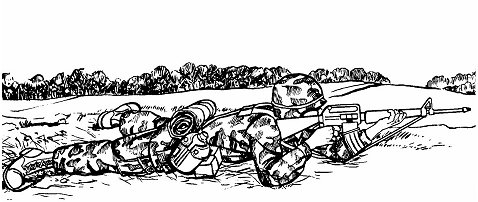
    “Basic Prone Unsupported Firing Position. This firing position (Figure 4-22) offers another stable firing platform for engaging targets. To assume this position, the soldier faces his target, spreads his feet a comfortable distance apart, and drops to his knees. Using the butt of the rifle as a pivot, the firer rolls onto his nonfiring side, placing the nonfiring elbow close to the side of the magazine. He places the rifle butt in the pocket formed by the firing shoulder, grasps the pistol grip with his firing hand, and lowers the firing elbow to the ground. The rifle rests in the V formed by the thumb and fingers of the non-firing hand. The soldier adjusts the position of his firing elbow until his shoulders are about level, and pulls back firmly on the rifle with both hands. To complete the position, he obtains a stock weld and relaxes, keeping his heels close to the ground.” – U.S. Army Field Manual 3-22.9 “Rifle Marksmanship

    My exhaustion overcame me and I managed to fall asleep listed to my side like I was back in the hospital bed. My abs were still weak and would remind me of the new hole in them whenever I did anything resembling sudden movement, so I wasn’t terribly worried about rolling around.  It wasn’t a very restful sleep; there was a lot of tossing and turning, but eventually this wreck of the Cancer Fitzgerald sunk into the bed long enough to have sleep that was unbroken by vitals checks and vomiting.

    There was no rest for me, however, as I had referrals to go to the next day. First up was with the ENT Oncologist, a civilian specialist at a nearby civilian hospital. Despite the recommended treatment from the tumor board at the Army hospital, they hinged it on, “but still go see Dr. Shannon, we want to know what he thinks.”  So here I was, crouched over my Army hospital-grade walker in the frozen parking garage of the hospital with my mom, inching my way toward a second opinion.

    Dr. Shannon’s office was unremarkable… with the notable exception of my presence in the waiting room. Every other patient in the room was old enough to have one foot in the grave, and all of them stared at me at one point. Me in my walker just waiting to be called back; I could feel their bewilderment. This was as close to feeling like Rosa Parks in the wrong bus section as a young white guy can get.

    After being called back I scooched my way into the exam room and sat in the upright padded exam chair for what I knew was going to likely happen here: another scoping.

    When you get scoped, it means they are shoving a camera into one of your orifices to do a visual inspection. In my case, this involved taking a camera on a flexible metal hose, a little smaller in diameter than a soda straw, and sliding it up my nose and into the back of my throat to take a look at the tumor (see this post for an example of what a scope sees).

    I was correct. Dr. Shannon scoped me, did an exam on my neck, and asked me some questions. He’d already seen all of my imagery from the Army hospital, and had spoken to Dr. Sierra about my case. What he thought about this was not only going to be factored into my care team’s decision making process, but my own, as he was a regarded specialist by them.

    He recommended against surgery. Whew? I guess this is the part where I started to repair my battered trust in the medical establishment after the last 48 hours: This guy had nothing to gain by recommending I not do the very thing he and his hospital profited from. My ENTs were not certified to do this surgery, so it would have fallen to him, and he knew that. Yet, he agreed with their treatment plan to the letter, and explained why. In this world, professional ethics are under siege across society, and this man held the line. Bravo, Dr. Shannon, bravo. (I suppose it also didn’t hurt that one of my colleagues’ wife is his colleague and name-dropped me prior to the appointment.  Hooray for serendipity.)

    Next up was a ride to the Army hospital for my first meeting with the Medical Oncologist (Med Onc) chief, Dr. Ferrell. Dr. Ferrell was very highly regarded by everyone on the Army medical staff so far that mentioned his name. A “made man” of sorts, because not only had he been doing his job in the hospital for a long time as an oncologist, but he was also a full bird Colonel in the Army Reserve in the same capacity.

    I once again sat in waiting room with my mother, where everyone else was 35+ years my senior and clearly had spent a lifetime around loud noises, as the two men talking to each other next to us demonstrated with their loud voices and the constant use of “WHAT?” I was again viewed with a curious eye as I plopped into the seat from my walker.

    The Army is, culturally, a strange place. Army hospitals are not exempt from this. We have expensive, complicated, digital systems that store all of our information from clothing issue records, to administrative files, promotions, and yes, medical data. Despite this, either out of habit or convenience, many of these offices require paper forms to be filled out that force you to recall all of the information that could be pulled up in a few mouse clicks with the proper permissions.  I was just about at the end of my rope with this. 

    I took one look at the very poorly photocopied forms and started to get into a bad mood, either from stress, frustration, sleep deprivation, pain, or some combination. I filled out the administrative data and wrote on them, “All of this information is visible in my digital record” and turned the forms in. One of two things then happened: either the clerk at the desk stuck the forms into some folder that will never see the light of day, or less likely, they understood they were just going through the motions with this practice and my small act of medical disobedience was understandable.

    Dr. Ferrell came to greet us and walked us back to his office. He had the air of someone who was quietly, calmly, confident, but was ready to be proven wrong- my kind of guy. We talked through his role in my treatment: he was to oversee the administration of my chemotherapy treatment.

    I absolutely hammered him with questions. This was the guy I really wanted to talk to since this whole thing kicked off and he was able to answer all of my questions, or at least satisfy my curiosity. He went over the treatment plan and told me I was going to get the most aggressive treatment for my cancer, because, “you’re young enough to handle it, and it’s unlikely we will damage your kidneys.”

    I am so tired of hearing about how young I am.

    ============

    America, Tkachuk Yeah!

    Cisplatin was the name of the drug I was prescribed in my treatment plan for chemotherapy, and I was prescribed the maximum dosage to work in concert with my radiation. Potential side effects: hearing loss, kidney damage, immune system degradation, hair loss, and sterilization. Another fun grab bag of side effects to mirror the hellscape that radiation therapy also presented. 

    It was at this time that the possibility began to creep into my mind that this cancer wasn’t just trying to kill me, it was trying to kill my Army career. Some of the side effects from the treatment of this condition are career-enders, in either a medical “chapter” (discharge) or medical retirement, and that wasn’t an outcome I’d considered until I had some time to piece that together in my mind.

    Take one brick of stress off, replace it with ten more.

    The next day, however, radiology oncology (Rad Onc) techs started to second guess some of the worst of the aforementioned side effects based on their experience when mapping me. They told me that a number of their head and neck patients kept their hair, and told me not to shave mine down preemptively like I’d planned, because it would screw up the mapping process later.

    Mapping involved a few interesting experiences. I showed up, again with my mother who by this time was amassing a phonebook-sized folder of medical paperwork to tote with me to each appointment, and was called back by the two Rad Onc techs that would be handling my treatments. The only previous instructions I’d received were, “be clean shaven for mapping, and each of your treatments” and while I mourned the loss of my mustache, it was for a greater good.

    I had to make a mouthpiece first. Anyone who has made a mouthpiece for contact-sports knows that this involves heating up a piece of solid mouthpiece-shaped rubber and then softly biting into it until it cools around teeth to ensure proper fit when you need to wear it. The second part of mapping was having a giant head and shoulder soft cast made from a pliable mesh material that also was heated up… to make a mouthpiece-type impression of my upper body. This process was very thorough, as this mask had to hold my head perfectly still each time at each treatment. Any margins or gaps would mean having to have the mask re-made and I’d have to be remapped. The mouthpiece I’d just made was clipped into the mask perfectly, and they tested the fitment of the whole system with a fancy machine that was similar to a CT in many ways. Last I was punched with a tiny tattoo of infrared ink on my chest for the laser to read each time, and that was it. Rounds complete: I was a ‘go’ at this station.

    One thing I’m really glad the techs did prior to leaving was offer me a tour of the radiation therapy suite. I took them up on this and was guided into a room that looked like some sort of chamber from the Death Star. I suppose this is oddly appropriate since the cancer will likely view this the same way. There’s a flat table that a machine revolves around and shoots radiation in photon beams into the tumor. The whole process is supposed to last only a few minutes; you spend more time in prep and tear-down than you do actually getting zapped.

    The next day I went on a date with Addison to our local junior league team and she’d gotten us seats just two rows up from the penalty boxes, which was a fun experience given how much fighting goes on at the lower levels of hockey. As previously mentioned, Addison is Canadian by birth and had a rooting interest in the “4 Nations Faceoff” tournament as Canada and the U.S. were playing while we were at this game. 

    I’d fully planned on leaving it alone, figuring Canada’s absolute star-studded roster would roll through every other team, so no shit talking would’ve bore any fruit, but once Canada went up 1-0 she couldn’t help but start in on how, “The U.S. needs to be humbled.” This coming from a citizen of a country that wins 75%+ of international hockey tournaments and still provides the plurality of NHL players was rich, so when the U.S. took the lead off of Dylan Larkin’s unassisted goal and then hit the empty-netter at the end to win, I let her have it. It wasn’t until after the game ended that the highlights rolled into my phone of USA’s Tkachuk brothers being two thirds of the fights in the first nine seconds of the game. USA, USA, USA! I let her have it the rest of the evening, and the following day, as Instagram put forth some wonderful reels equating them to the Smash Brothers from The Mighty Ducks franchise. 

    It was a critical morale boost as I began to truly contemplate what future me would look like.
    The views and opinions presented herein are those of the author and do not necessarily represent the views of the Department of Defense or the U.S. Army.
  • Prologue Part 4: The Gang Gets Booed in Canada

    Referral-ception.

    I’ve not gotten nauseated by the (now) two times I’ve been under general anesthesia, but I sure do get dizzy as shit when I stand. Rena was able to get me into her small SUV with the help of a volunteer at the hospital, but getting from the street to my house took a little more of a coordinated effort. My frame dwarfs hers and it was like one guy trying to move a large box that barely fits through a doorway solo: technically possible, but not advisable if it can be avoided.

    She put me into bed and started a medicine journal for me. After some dozing, I joined her on the couch and we started watching “American Manhunt: OJ Simpson” on Netflix.  I vividly remember the OJ Simpson trial as a kid in the 90s: the courtroom drama, the main cast of witnesses and their tabloid exploits, and of course the white bronco. Sadly, this was the one part I wanted to see the most and I managed to doze off for only that episode.  Not doing anything besides being put to sleep and cut open is absolutely exhausting.

    Eventually Rena passed me off to someone we’ll call Addison for now. Addison and I had just started dating and despite everything going on with me, she was still subscribing to the idea that I might be worth trauma bonding with over this experience. She even shopped with me the night before the procedure to make sure I had throat-friendly foods to survive off of for at least a few days, and kept me from buying more than one thing that were poor investments to this end.

    Addison kept up the maintenance of my medicine schedule and kept vigil until the evening. Because of my prolific napping during the day, I’d managed to stay up well beyond my normal bedtime but eventually managed to go to sleep.

    Rena once again escorted me back to the hospital for a follow-on ENT appointment two days later with LTC Sierra. She basically reaffirmed she had no reason to change her opinion on the findings despite Pathology not having completed the biopsy yet, and began to run down the complete cast of characters I was about to see in the coming weeks through referrals and referrals from my referrals. 

    We need to go deeper.

    ============

    Your average law enforcement interaction.

    In preparation for the eventual official diagnosis I made plans to go to Canada with Addison. See, she’s actually Canadian and was floored that I’d never been, what with having spent so much of my life in states bordering the great white north. My Detroit Red Wings were on their western North America road trip and this was as good of time as any to go see them. Hell, for all I knew it was the last time I was going to get to see them. I found us reasonably priced tickets, and she was going to be my chaperone as we made our way to Vancouver (she likes to joke that this was actually the second time I’d been in Canada).

    Fortunately, I made the call Saturday that I was feeling well enough to travel because my sore throat was just about gone and I was able to choke down (bland) solid foods. Mother nature gave us her best shot as we braved significant snowfall all the way up I-5 in her seasoned RAV4, but we made it to the border where Canada was rolling out the red carpet on the heels of the Trump tariff announcement.

    I handed the Canadian border guard our passports, answered the line of questions your average American would expect from law enforcement, and went on our way. 

    Addison immediately turned to me and said, “Wow, I’m sorry she was so extra; that’s more aggressive than anything I’ve experienced before.”

    Me, visibly confused, “What do you mean? That is about what I expected…”

    Addison explained to me that what I found to be a very standard law enforcement interaction was, in fact, incredibly unusual and that I was treated with undue hostility.  I was still amazed that we were the only car at the gate for the entire interaction and that no one was visiting Canada or even returning home on a Sunday afternoon.

    We had an absolutely amazing time checking out the Grandville Island district, checking to see if the rumors were true about Canadian Costco carrying bulk hockey gear (fake news), and heading into the arena.

    Something you need to understand about hockey, if you’re unfamiliar, is that both anthems, Star Spangled Banner and Oh Canada, are played if one of the teams is from the other country. This is fairly standard practice across both nations, and the crowd sings, or is at least respectful of, both anthems. Because of the tariff announcement, two Canada games from the previous night involved the crowd booing the U.S. anthem. This is almost unprecedented, as there are even documented instances of both anthems being sung by the opposite crowd when PA systems fail. You have to understand and appreciate hockey culture to really understand how fucking angry fans have to get to break with this tradition. This is peak hockey civil disobedience.

    Vancouver fans are generally the rowdiest of Canadian fanbases, and they had a whole 24 hour sports news cycle to soak this up. I was expecting boos during the anthem, but Jesus Christ. It was loud, it was uncomfortable, but I held my hand over my heart and my lips shut and stood respectfully silent for both anthems. I mean, I get it, they have a right to be upset and symbolically voice their distaste. Of all forms of protest, this was pretty innocuous if the other end of the scale is blocking an interstate highway.

    Fortunately, it was a fairly standard hockey crowd and even leaned, perhaps, at least 20% Red Wings fans. Despite dealing with the stress of an overtime game as an “away” fan in my weakened state, it was an overall good experience and I’d go back.

    We eventually made our way back south, and got caught in the throng of Americans returning home for the weekend where we experienced a very cheery, albeit short staffed, American border crossing guard that lightly roasted Addison for admitting she didn’t buy me anything.

    The next day I was officially diagnosed with cancer.

    ============

    My tumor has more civil rights than the average North Korean citizen.

    I saw the pathology report in Genesis the moment before LTC Sierra called me. It confirmed everything she’d hypothesised up to that point: oropharyngeal squamous cell carcinoma with p16 marker, meaning HPV related. Congrats on being one of the fewer than 30,000 people, overwhelmingly men, that get this a year, Kyle! The good news, if it can be called that, was that because I wasn’t a smoker or drinker, my flavor of cancer was much more responsive to treatment.

    What does that mean? I was being referred to the following for evaluations and preparation to find out:

    • Radiology Oncology
    • Medical Oncology
    • Speech Therapy
    • Nuclear Medicine
    • ENT Oncology at a nearby civilian hospital
    • Nutritionist
    • Behavioral Health
    • Social Worker
    • Case Manager
    • Genetics

    I could hear the appointment wait line music start to play in my head.

    “All of these people will call you, you shouldn’t have to chase anyone down,” she said as visions of appointments danced in my head.

    The tentative treatment plan would be surgery, radiation, and chemotherapy but the “Tumor Board” (this is not a euphemism for the chain of command board in the company HQ, as PFC Cancer would have cracked a joke about earlier in his Army career) would convene on Friday to “stage” me and formally recommend treatment. This would all hinge on the results of my “PET scan,” which was a type of scan designed to see if the cancer had spread to any other parts of my body.  Cancer in other parts of the body = Fire up the John Cena tracker.

    The Tumor Board is all the heads of state of the relevant departments; in my case ENT, Radiology, Radiology Oncology, Medical Oncology, and Pathology coming together and voting on a plan to present to me for approval. There’s even meeting minutes, of sorts, in my Genesis records.

    They presented their plan to me immediately following the meeting, at my previously scheduled onboarding appointment at radiation oncology: No surgery was being recommended, but still to see the ENT Oncology civilian expert to get his opinion. I was being told radiation and chemo were my path forward, but that I was free to ask Medical Oncology their thoughts next week on immunotherapy. The silver lining, of sorts, was that the PET Scan didn’t reveal anything but some, probably, unrelated scarring on my lungs and a mass in my liver that was probably a benign rogue blood vessel, but I’d need a separate MRI of that just to be sure.

    Let me backup and explain the PET Scan real quick, with the help of our friends at ChatGPT:

    “A PET scan (Positron Emission Tomography) is a type of medical imaging that helps doctors see how your body is working, rather than just what it looks like.

    Here’s how it works in simple terms:

    1. A special substance (called a tracer) is injected into your body. This tracer contains a small amount of radioactive material that can be tracked.
    2. The tracer moves through your body, and certain parts of your body (like organs or tissues) use it. The tracer gives off tiny particles called positrons.
    3. A scanner detects the positrons as they are released, creating images of where the tracer has gone. This helps doctors see areas with changes in activity, such as tumors, infections, or problems in the heart or brain.

    In short, a PET scan helps doctors look at how things are working inside your body, not just the structure, by using a special tracer and detecting the energy it gives off.”

    What happens in reality is you show up to Nuclear Medicine after 24 hours of only being allowed to eat plain meat or solid plain cheese and water, in your comfy clothes, get an IV placed into your arm and brought into a room with dim lights, no sound, and a warm blanket. The rationale here is that a stimulated brain and shivering muscles will absorb the radioactive material you are getting injected with, which is universally seen as bad.

    Just in case you glossed over the first few mentions: you are literally getting injected with radioactive sugars. The tech brought it into the waiting room in a lead-lined case, in a lead-lined syringe and injected it into my IV. Awesome, at least if I have cancer I also may develop superpowers for a short time as a result.

    Then you lay in yet another MRI-esque scanning tube to get your PET and another round of CT with contrast. After the CT with contrast my face had a reaction to the contrast, which was a slightly itchy face and the slight look and feel of being sunburned. I am just glad I didn’t get actually cooked by the scan- it would be a real bummer to have cancer and radioactive blood to go along with a sunburned face.

    Fast forward back to Radiology Oncology.

    Radiology Oncology itself is quite possibly the scariest appointment I’ve been to to date. Everything being described by the Dr, a jovial fellow we’ll call MAJ Rafferty, was horrific to my non-medical mind.

    After every disturbing side effect of radiation and chemo was listed, it was always capped off with, “…but your type of tumor will just melt away by the end.” 

    Fortunately, he did place a referral to the nearby highly regarded cancer center called “Fred Hutch” to see if a different kind of radiation might fit the bill better, one generally given to pediatric patients but, once again, because of my age, I may be a candidate for.  The perks of being “the youngest we’ve seen” I suppose.

    The next entry of this journal will be somewhat delayed, the reasons for which will be covered in the next journal entry.

    The views and opinions presented herein are those of the author and do not necessarily represent the views of the Department of Defense or the U.S. Army.