
Chaos Comes to Those Who Wait.
Monday was supposed to mark the beginning of my last week of normalcy, or what I’m beginning to recognize will be “old me” in a few months. Instead, Monday upended my entire treatment plan and injected chaos into my care team.
When I hit the road to Seattle to visit the local university cancer center, I felt like I was checking another block- just another task to complete on the road to treatment. I was going there to get a second opinion, on the referral of MAJ Rafferty from RadOnc, to see if I was a candidate for “proton therapy.”
“In very basic terms, the main difference between proton radiation therapy and photon radiation therapy is the type of particles used to deliver the radiation.
Proton radiation therapy uses protons, which are charged particles. These protons release their energy mostly at a specific depth in the body (called the Bragg peak), so they can target tumors very precisely with minimal damage to the surrounding healthy tissues.
Photon radiation therapy uses photons, which are light particles (like X-rays). These photons release their energy as they pass through the body, meaning they can affect both the tumor and the healthy tissue along the way to the tumor.
In summary, proton therapy is more precise and may spare more healthy tissue, while photon therapy is more commonly used but may affect more surrounding tissue.” -ChatGPT
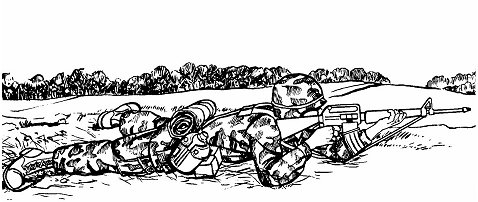
To make this into a military analogy: Proton therapy is a sniper rifle trained on a specific target. Photon therapy is a hand grenade addressed “to whom it may concern.”
MAJ Rafferty knew that proton therapy was not widely practiced on adults (it’s mostly a pediatric therapy due to the smaller impacts on long-term quality of life) but wanted to see if I was a candidate “because of my age.” At 38 years old I was now suspected to be more in league with an eight year old than an 80 year old. What a time to be alive.
After, yet again, being the youngest person in the waiting room by several decades, I was seen by a RadOnc resident where I was immediately told I was a good candidate. The RadOnc head and neck specialist, Dr. Panner, then came in and, in very monotone serious terms, explained that not only was I a candidate because I (ostensibly) have a lot of life left to live, but also because the cancer is in a sensitive area. He immediately wanted my consent to treat me and to consolidate my care under the university hospital cancer center umbrella. Life comes at you fast.
I told him how important it was for me to hear from my team of Army doctors that they agreed with his proposed treatment plan and that they should be able to reach a consensus with him. I knew them and trusted them, so it was important to me that they blessed off on his proposed treatment too. Fortunately, his treatment plan was virtually identical minus the change in location.
This was a lot to take in in the span of minutes. You know what else is a lot to take in? Another scope to the face. Dr. Panner decided this was an excellent opportunity to teach his resident how to perform an oropharyngeal scope. I anticipated this, to some degree, but that didn’t make it any more pleasant. The scope itself doesn’t really bother you: it’s the numbing agent. It happens as a nasal mist that then runs down the back of your throat and, before it numbs anything, tastes terrible.
It was late by the time we left the university hospital, and there wasn’t an opportunity to communicate my news to my Army team of doctors. First thing the next morning, however, I fired off a series of emails to my doctors to let them know what happened the afternoon prior. Closely after that, my ENT nurse called me to ask me what I wanted to do. I told her that, pending the input of the Army doctors, it made sense to me to keep all my care under the same banner, but not to turn anything off yet at the Army hospital.
Enter another agent of chaos: I was then called by the proton therapy scheduler, who told me I’d be coming in Thursday afternoon to repeat the mapping process I mentioned in an earlier blog post, but she also told me that the chemo center was backed up so I should proceed with doing everything at the Army hospital since it was already set up there. Fair enough, works for me, I guess I’ll do that. It just so happened I was on my way into the Army hospital to do my “chemo class” anyway, so I could socialize all this there.
While I waited in the MedOnc lobby I experienced an interesting phenomena: my doctor did a drive-by on me by grabbing me out of the waiting room (I wasn’t scheduled to see him as part of this class) and discussed the news of Dr. Panner’s office’s findings. He agreed with pursuing proton therapy and keeping chemo concurrent. I interjected to let him know that all was well in the world because they had just told me on the phone to maintain my treatment plan sans radiation at the Army hospital. All parties believed this was a good thing, but he raised the issue that traveling an hour north and south every day might eventually get difficult on me. This was a reasonable concern, and we brainstormed with the social worker, who approached us in the hallway, on how we might address this. The downside to being a broke-ass Captain is that while I make a lot of money on paper, roughly half of it flies out the window due to reasons previously mentioned in this blog; lodging assistance would have to come from private sources (if at all). Otherwise, the drive was the drive and I either wanted to live or I didn’t.
I did an abbreviated version of chemo class. It was supposed to go longer, but once I realized the nurse was just going to read to me I asked her to hand over the materials for my later review and give me the grand tour. I met the staff pharmacist, looked at the chairs, and asked some questions about what I was allowed to bring and what they provided in house. Turns out chemo is a four to six hour ordeal in my case, so chargers and devices are a must-have.
I left feeling that, while logistically sub-optimal, this would be the path going forward. I was slapping the table and this would be the way. I wasn’t going to wait until April when chemo was available.
============
Godfather’s is open. Right? Guys?
When I was in my late teens me and three of my friends would pile into one of our cars and act like complete morons around my hometown of Kalamazoo, Michigan. We had someone from every demographic of dork-dom. We had Ted, the transplant New Englander who hadn’t figured out he was too sophisticated for us yet. Brad, the short chubby nerd. Mike, the goofy meathead. And me, the cynical asshole. We, as most men can attest, showed our care to each other by constantly harassing and berating one another. Real big “I hate you all but I’d die for you” energy that, so far as I’ve observed, is only common in male friendship circles.
We were cruising the mean streets of “The Zoo,” trying to figure out where we were going to eat, and in so doing also be obnoxious menaces to the general public (it was almost always Steak n Shake).
As we brainstormed somewhere other than Steak n Shake late at night, there was a period of silence when all you heard was Mike meekly saying, “Godfathers is open? Right…? Guys…?”
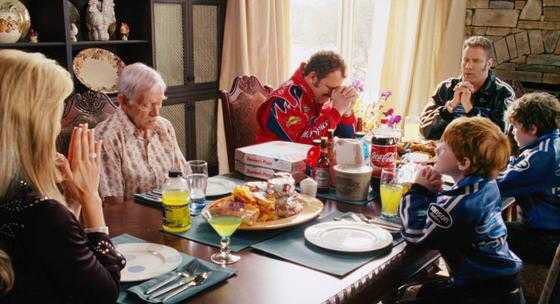
Me, Brad, and Ted all contemplated this briefly, and in unscripted moment of perfect unity turned to him and said, “MIKEY, SHUT THE FUCK UP.” It was poetry. When other people want to make a statement with an increasing lack of confidence, the common cultural reference is “I’m Ron Burgundy?” – we have “Godfather’s is open. Right? Guys?”
The next agent of chaos came in the form of a phone call the next morning. She was a nurse with the MedOnc team at the university hospital and wanted to know when I could come in for chemo lab testings. Uh, what? I explained to her what the RadOnc scheduler had told me from her same hospital and she was perplexed, as she didn’t know why they’d say that because they could absolutely get me in to start chemo on time with proton radiation.
“Do you still want to go ahead and make an appointment?” she asked.
“Godfathers is open. Right? Guys?”
The views and opinions presented herein are those of the author and do not necessarily represent the views of the Department of Defense or the U.S. Army.







 CPT Cancer
You must be logged in to post a comment.